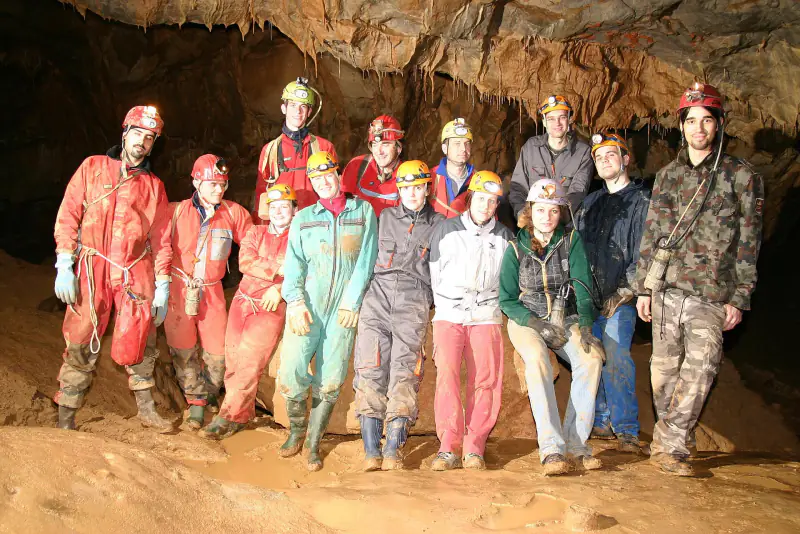
Caving safely
Most of Slovenia's caves have no paths or lights. This is how to approach them responsibly.
Beyond the handrail
How to go further without getting hurt or doing harm.
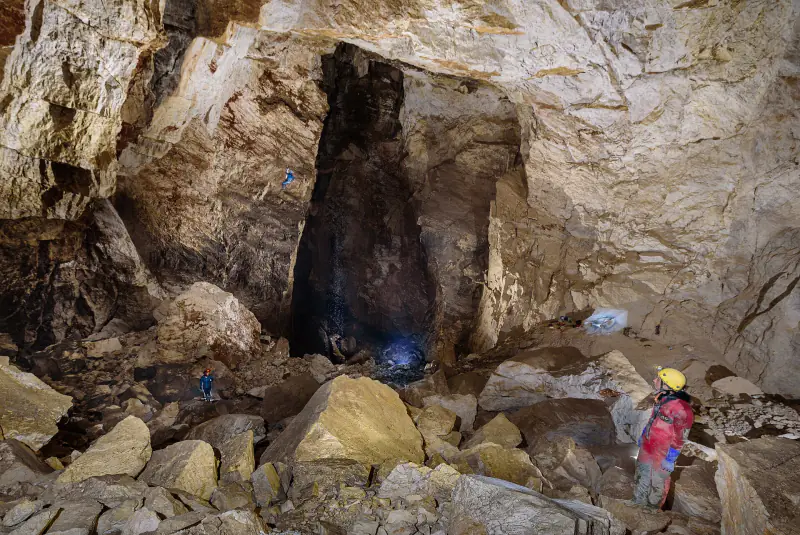
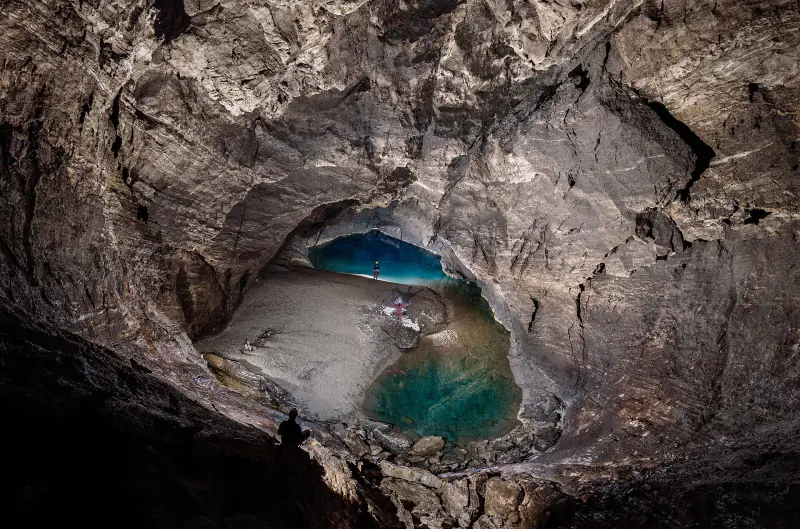
Show caves account for a tiny fraction of Slovenia's 14,000 caves. The rest are 'wild': no paths, no lights, no staff. Some are short, horizontal and harmless-looking. Many are vertical from the first metre.
Caving is a safe activity when done with training, equipment and people who know the cave. It is a dangerous one without them. Hazards are not obvious to the newcomer: a dry streamway can flood in minutes after rain that fell kilometres away; a small slip far from the entrance becomes a major rescue; cold and wet together produce hypothermia at 8 °C.
If you are curious, the answer is not to try it alone. It is to go with a club.
The essentials
Never alone
The traditional minimum is a party of three or four, so that one can stay with a casualty while others go for help.
Tell someone
Leave word of which cave you are entering and when you expect to be out. Agree a time at which the alarm will be raised.
Three lights each
A helmet-mounted main light and two independent back-ups. Phone torches do not count.
Watch the weather
Check the forecast for the whole catchment. Stay out of active stream caves when rain or snowmelt is expected.
Dress for the cave
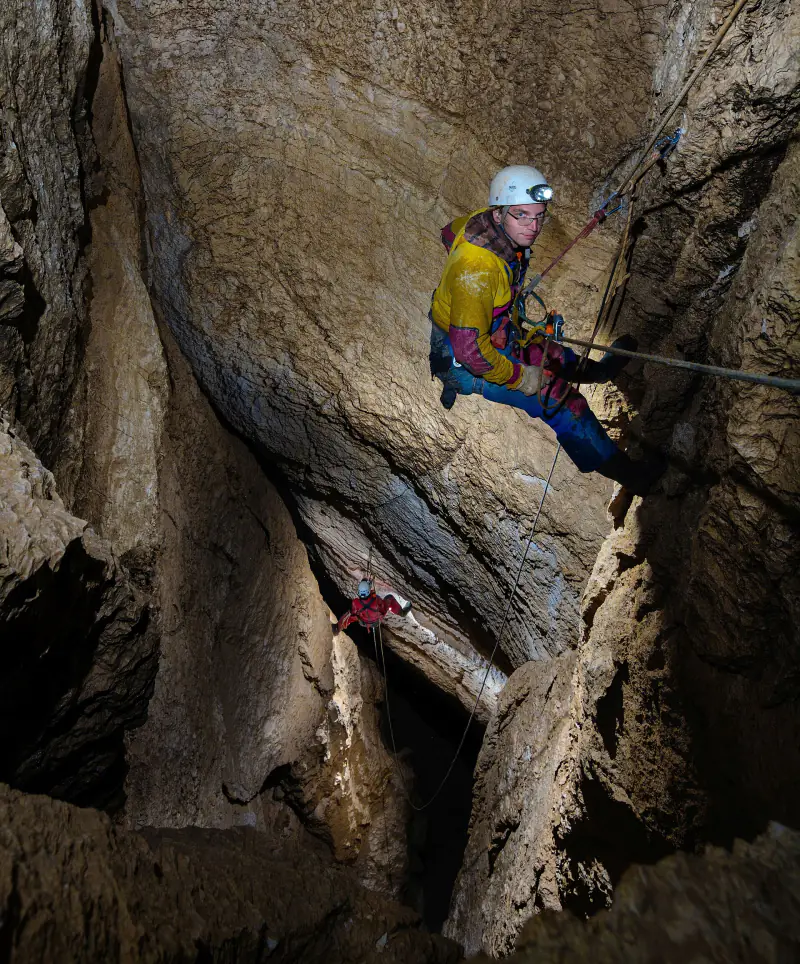
Helmet, sturdy boots, gloves and clothing that stays warm when wet. Vertical caves need single-rope technique and training.
Know your limit
Turn round while everyone still has the energy to get out. The way back is always harder.
Every cave is protected
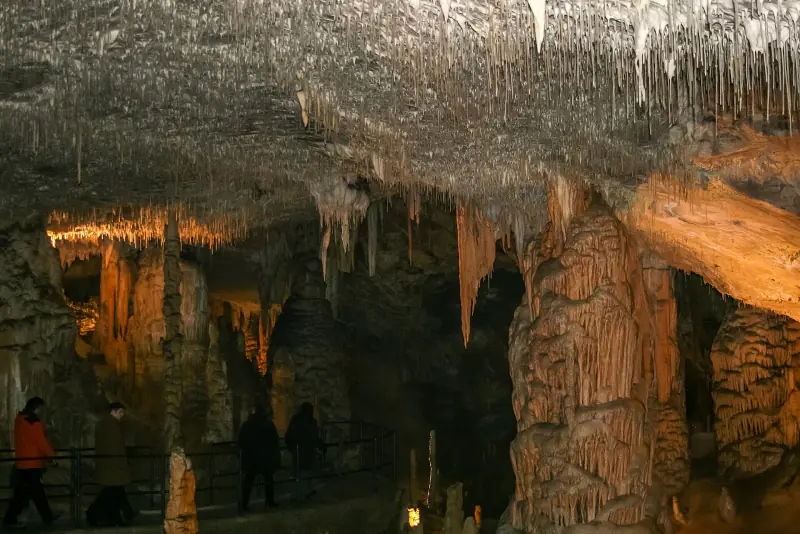
Under Slovenia's Cave Protection Act all caves are natural assets of national importance and the property of the state, whoever owns the land above. The Act makes it an offence to:
- break, remove or damage formations
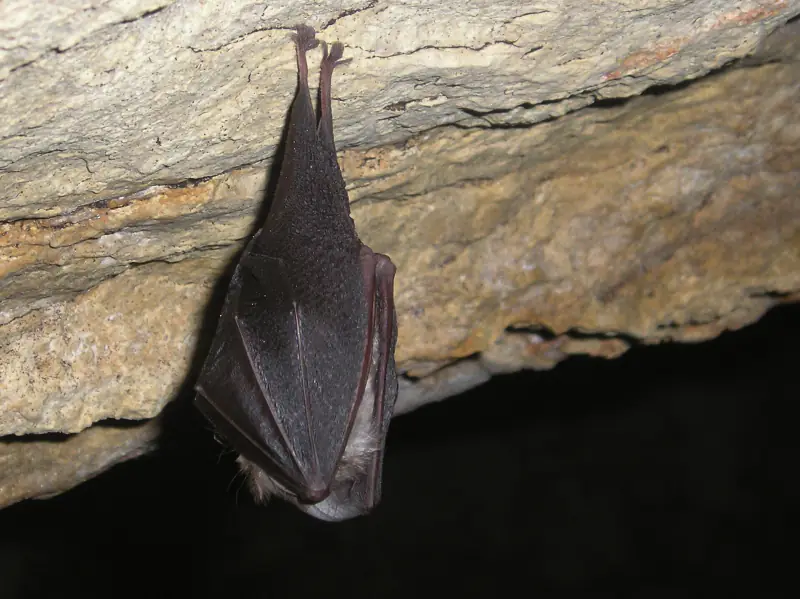
- kill, collect or disturb cave animals
- leave litter or carbide waste
- light fires or paint on the walls
- enter caves that are closed, or run commercial trips, without permission
Some caves are gated to protect bats, archaeology or delicate deposits. Access to them is arranged through the caving organisations.
The right way in
Slovenia has several dozen caving clubs united in the Speleological Association of Slovenia (Jamarska zveza Slovenije). Most run a beginners' course each year, teaching movement, rope work, surveying and rescue. Many also take guests on introductory trips.
Some show caves offer supervised 'adventure' tours of unlit sections with overalls, helmets and lamps provided: Postojna, Predjama, Križna jama and Planina Cave among them. For most visitors this is the best taste of real caving.
If something goes wrong
The emergency number in Slovenia is 112. State clearly that the accident is in a cave, give the cave's name and location, and say what has happened.
Underground rescues are carried out by the Cave Rescue Service (Jamarska reševalna služba), a volunteer organisation of experienced cavers and doctors that works with the national civil protection service. A rescue from a deep cave can take days. Prevention is the only sensible strategy.
Leave no trace
Do not touch
Skin oils stain calcite permanently and stop it growing. A broken stalactite will not regrow in a hundred lifetimes.
Stay on the route
Mud carried on boots dulls white flowstone for ever. In wild caves, follow the marked or trodden line.
Mind the residents
Keep light and noise away from bats. Never handle an olm or any other cave animal.
Carry everything out
Including food crumbs, spent batteries and human waste. Nothing decomposes normally underground.
Start with a guided trip
Ask at the larger show caves about adventure tours, or contact a local caving club.