The Classical Karst
A dry limestone plateau above Trieste whose name became the word for limestone landscapes everywhere.
Where the word was born
Stone, red soil, wind and wine.
The Karst, Kras in Slovene and Carso in Italian, is a limestone plateau that rises steeply behind the Gulf of Trieste and runs inland to the Vipava Valley. It is modest in size, around 40 km long and 13 km wide, and mostly 200 to 500 metres above the sea.
Its importance is historical. Travellers on the road from Vienna to Trieste crossed it and were struck by a land without rivers, strewn with white rock. In the 19th century Viennese geographers made it their reference landscape, and the regional name became a scientific term. When specialists want to be precise they call this original area the Classical Karst.
Red earth, white stone
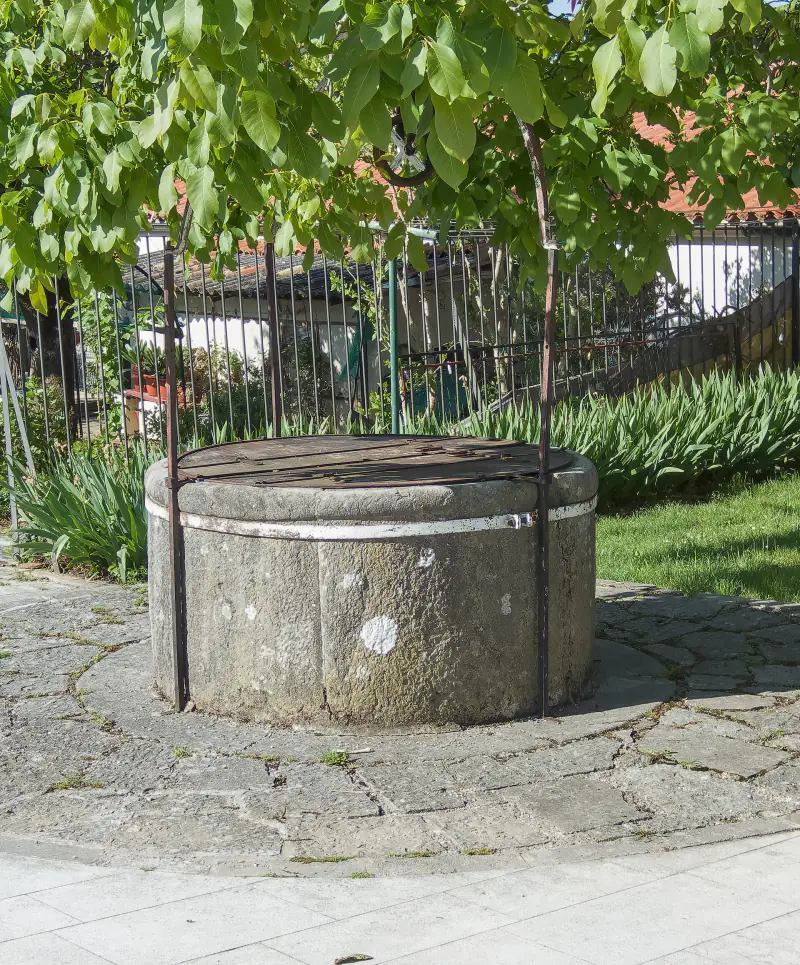
There is almost no running water on the surface. Rain sinks at once into the rock, and until the 20th century every village depended on cisterns and stone-lined ponds.
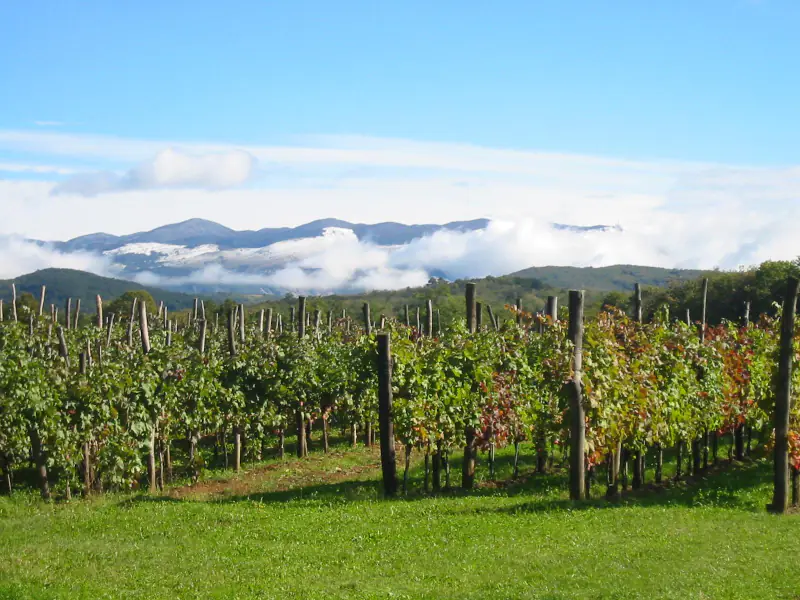
What soil there is collects in the dolines. It is terra rossa, a clay stained red by iron oxides left behind as the limestone dissolves. It grows Refosco grapes for Teran, a dark, sharp red wine, and the same air that sweeps the plateau cures the local ham, pršut.
Built against the burja
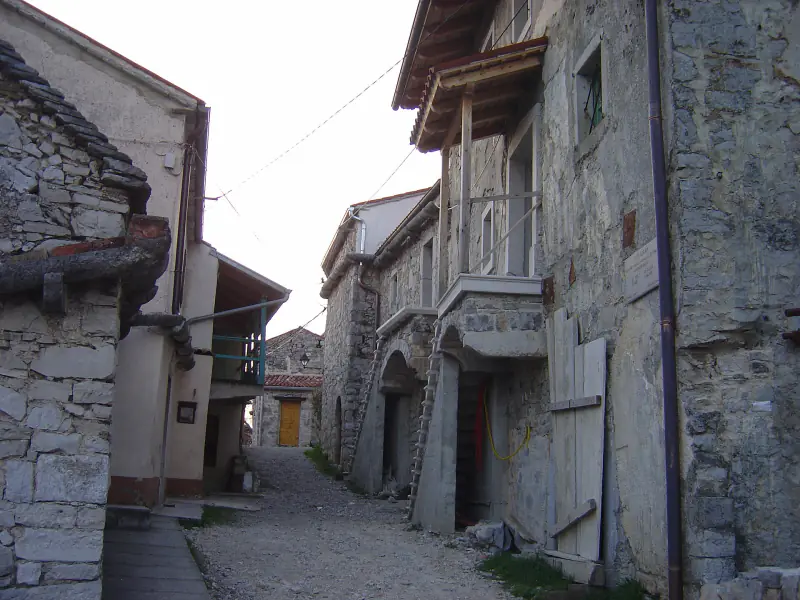
The burja, or bora, is a cold north-easterly that falls from the high plateaus towards the sea in violent gusts, sometimes above 150 km/h. Karst architecture is a response to it: houses turn a windowless back to the north-east, roofs were weighted with stone slabs, and courtyards are enclosed behind high walls and arched gateways.
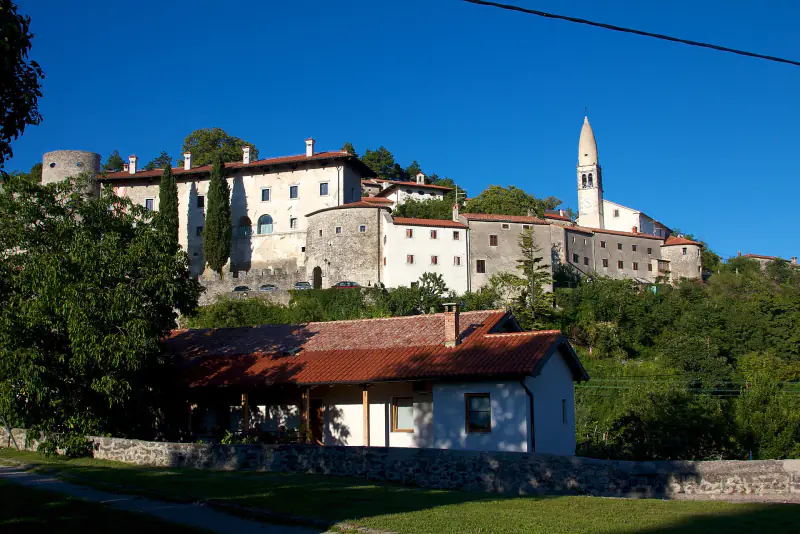
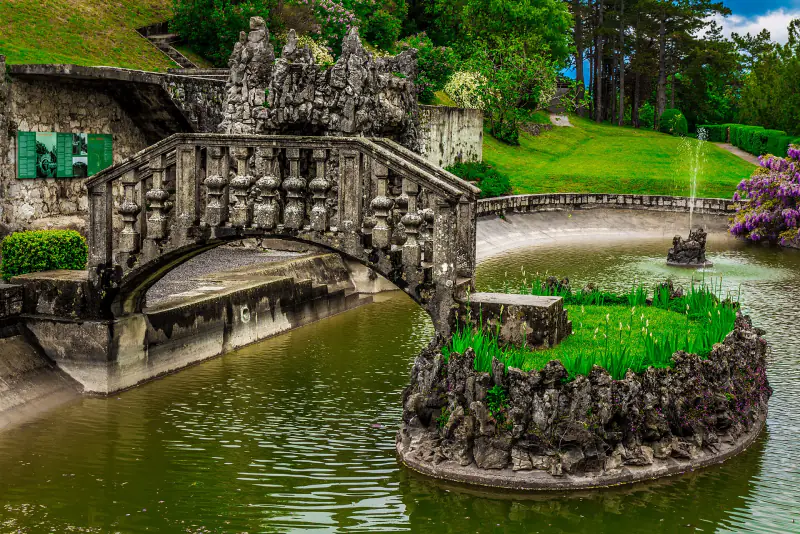
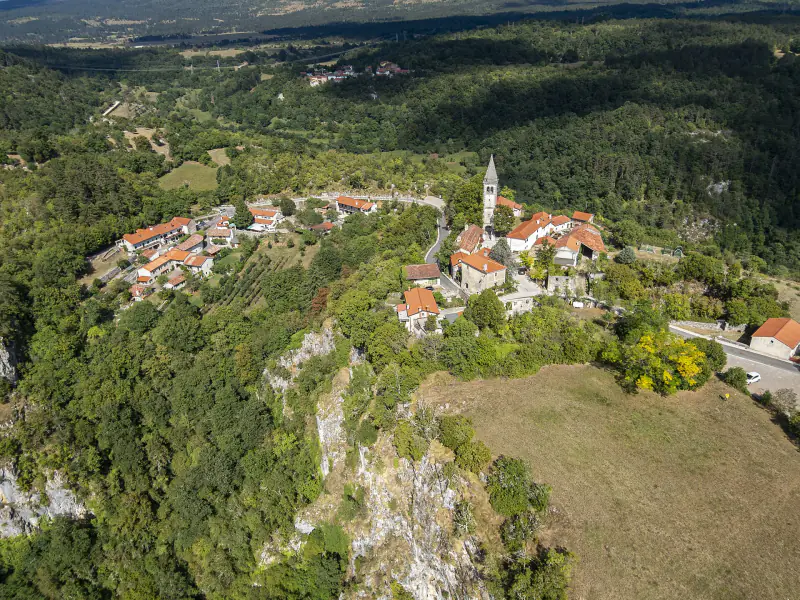
The hill village of Štanjel is the best-preserved example. The architect Max Fabiani, who was born nearby, laid out the terraced Ferrari Garden below its walls between the wars.
Lipica, since 1580
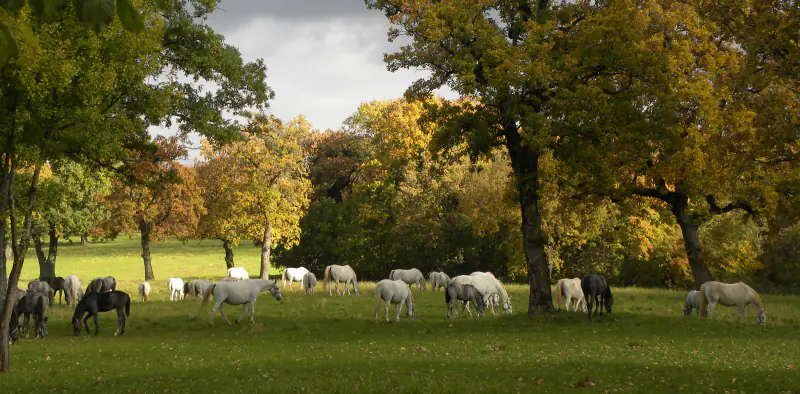
The stud farm at Lipica was founded in 1580 by the Habsburg archduke Charles to breed horses for the court in Vienna. The Lipizzaner takes its name from the village. Foals are born dark and turn white over several years.
The estate's oak-shaded pastures are a designed landscape in their own right, and lie five minutes from Vilenica Cave.
The Karst in figures
Caves of the Karst
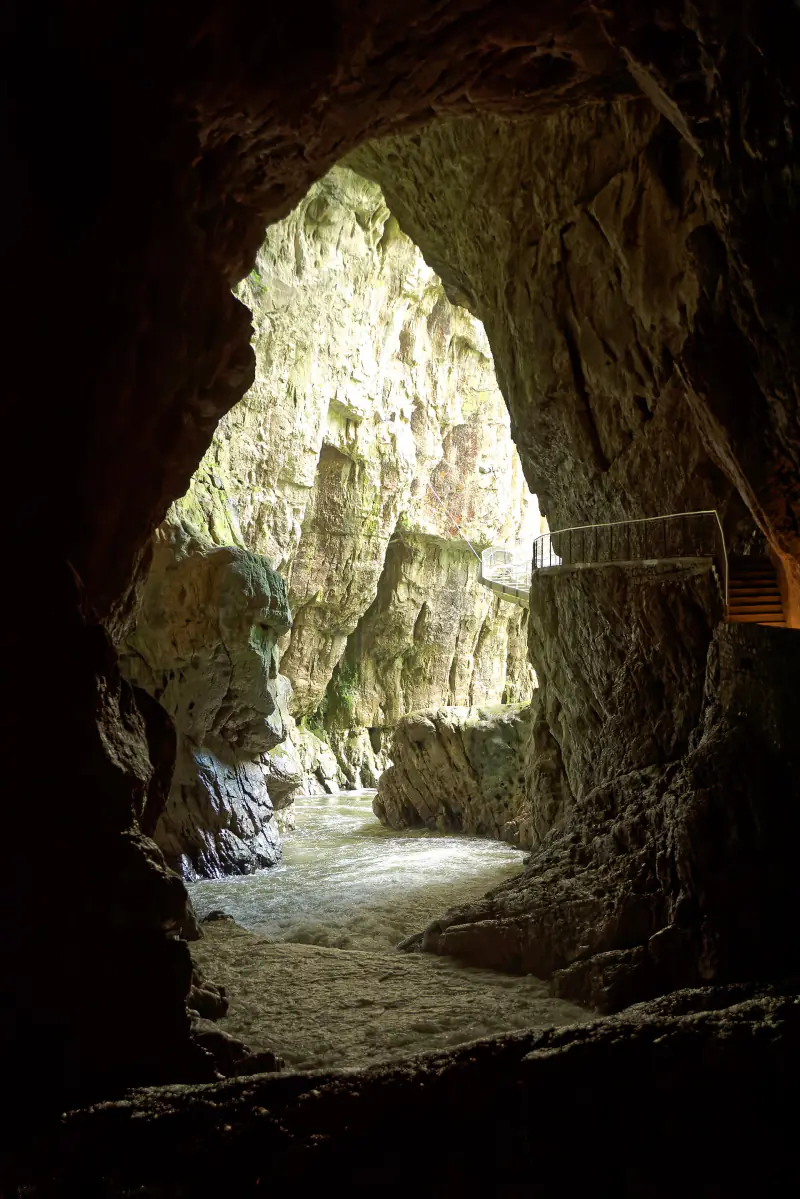
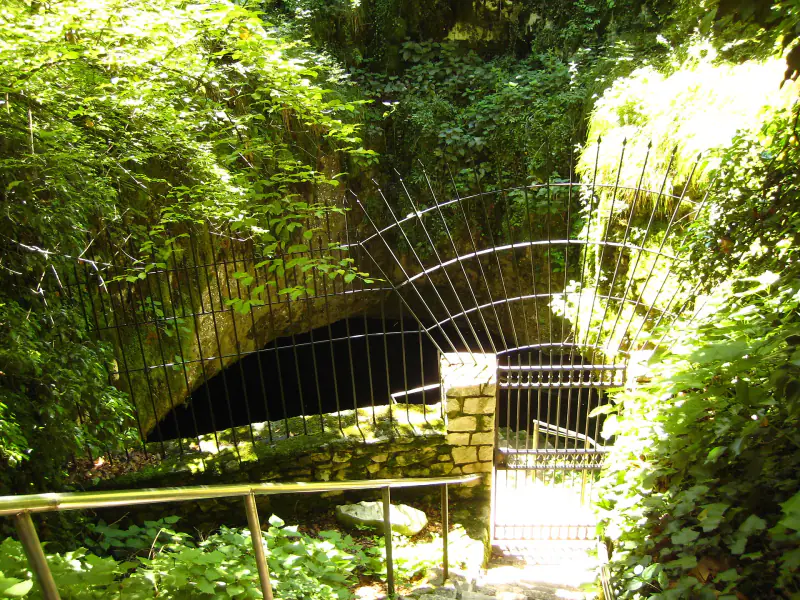
The plateau is hollow. Three of its caves receive visitors.
Reka, Timavo
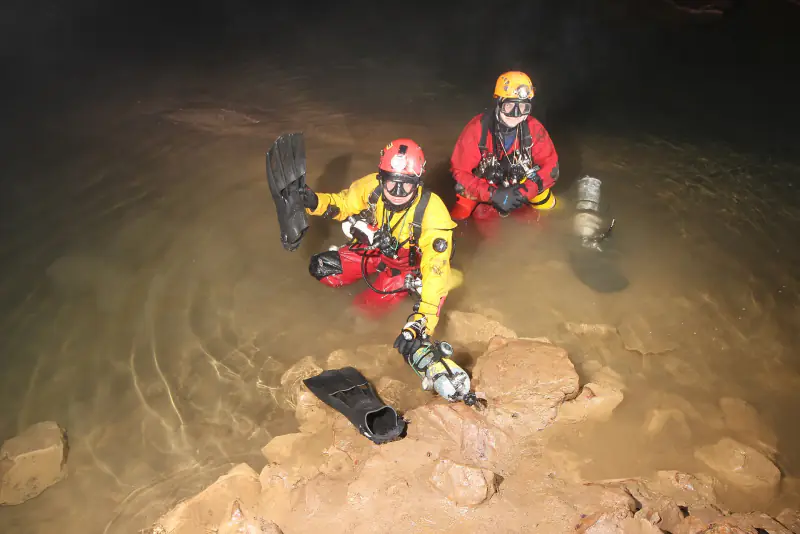
The only river to reach the Karst is the Reka, and it does not stay long. It sinks at Škocjan and travels about 34 km underground before rising from the foot of the plateau near Duino, in Italy, as the Timavo, only two kilometres from the sea. The Romans knew the springs and Virgil mentions them.
Cavers have reached the buried river at a few points in between through deep shafts, but most of its course has never been seen.
In pictures
Plan a Karst day
Škocjan in the morning, lunch in a village farmhouse, Štanjel or Lipica in the afternoon.