Pekel Cave
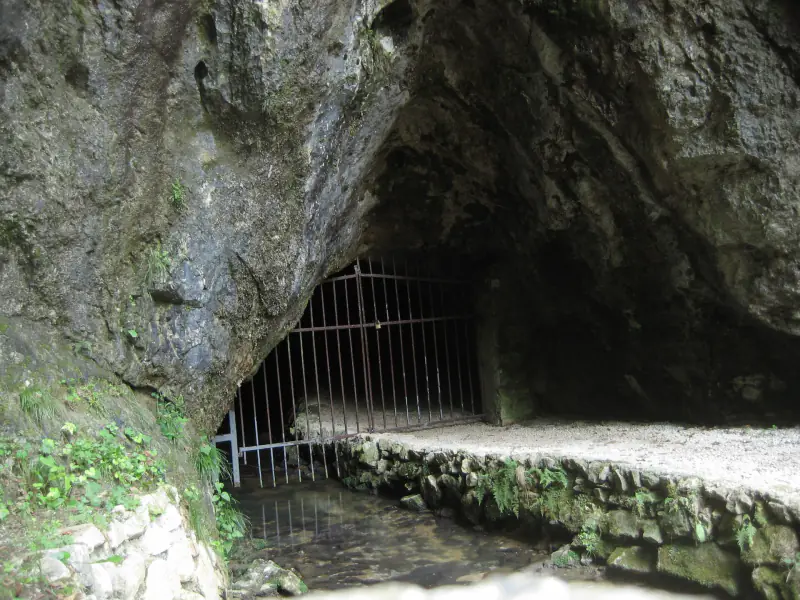
The name means Hell, after a rock at the entrance said to look like the devil. Inside, a stream drops over a four-metre waterfall.
A small cave with a waterfall
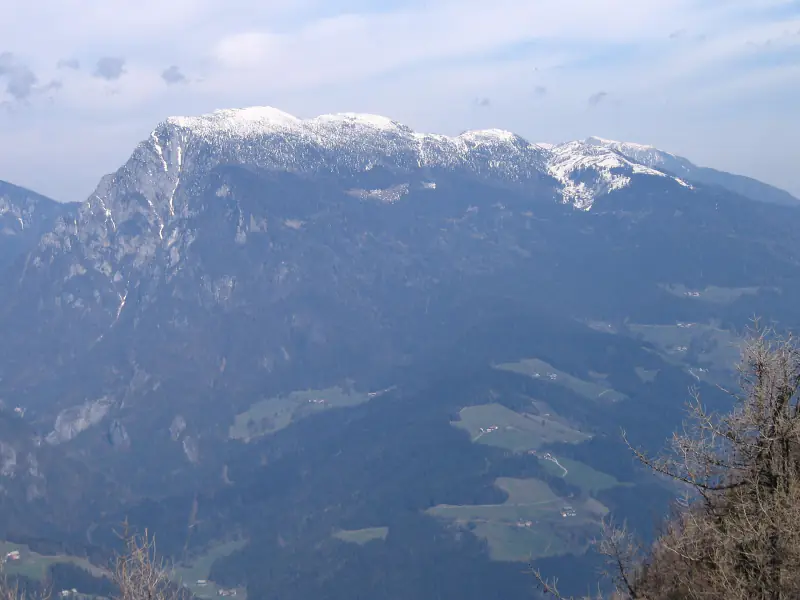
Pekel lies in an isolated patch of karst on the northern edge of the Savinja Valley, far from the great caves of the south-west. The Ponikvica stream sinks on the plateau above and re-emerges at the cave as the Peklenščica.
In winter warm air leaving the cave condenses into mist at the entrance, which together with the devil-shaped rock gave the place its reputation.
Pekel Cave at a glance
- English name
- Hell Cave
- Location
- near Šempeter v Savinjski dolini
- Length
- about 1.2 km
- Stream
- Peklenščica
- Waterfall
- about 4 m
- Levels
- a lower stream passage and an upper dry one
- Temperature
- about 10 °C
- Tour
- about 1 hour
Following the stream
The route enters along the stream on walkways fixed above the water. The passage is narrow and tall, with scalloped walls, and ends at the waterfall, the highest underground fall on a visitor route in Slovenia.
Up into the dry gallery
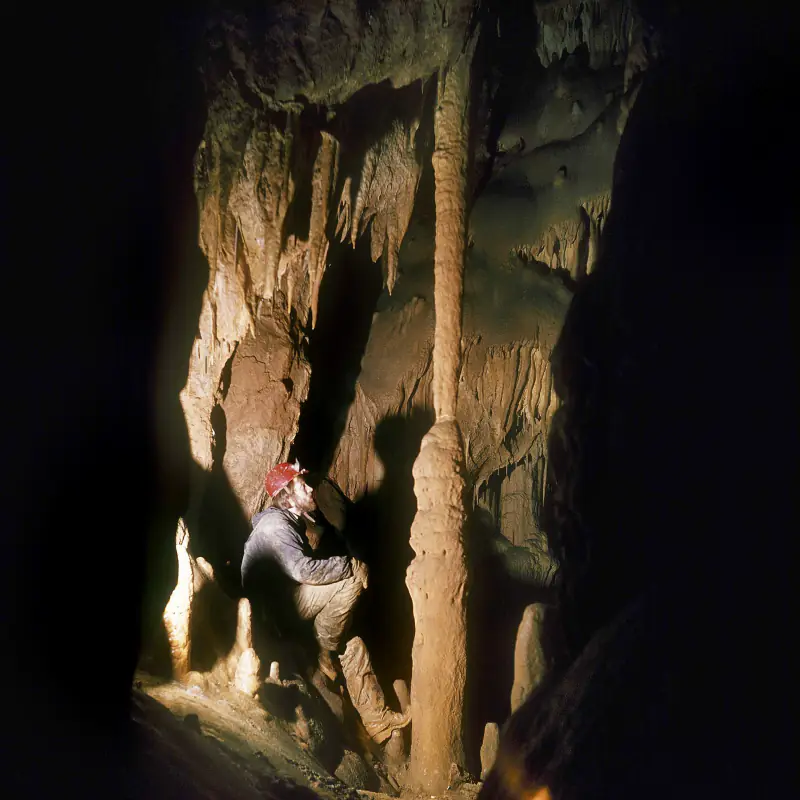
Stairs then climb to an older, dry level that the stream abandoned as it cut downwards. Here the cave is decorated with stalactites, stalagmites and small rimstone pools. The tour leaves by a separate upper exit and returns through the forest.
A few minutes away in Šempeter is one of the best-preserved Roman cemeteries in Central Europe.
Pekel Cave in figures
Before you go
Getting there
The cave is signposted from Šempeter, just off the A1 motorway between Ljubljana and Maribor, about 15 minutes from Celje.
On the tour
A guided visit takes about an hour on good paths with some stairs. It is an easy outing for children.
Good to know
The cave is usually open from spring to autumn, daily in summer and at weekends in the shoulder months.
Opening times, tour schedules and prices change with the season. Always confirm them with the operator before you travel: the Šempeter tourist association.