The olm
A blind salamander that keeps its gills for life, can fast for years and may outlive the people who study it.
The animal that never grows up
Pale, blind, slow and extraordinarily long-lived.
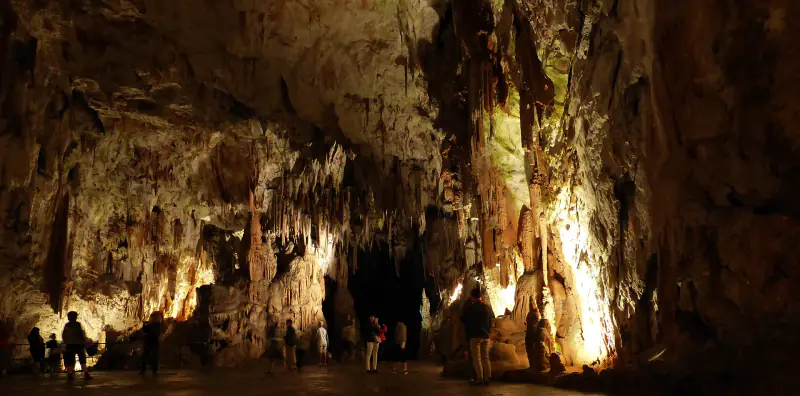
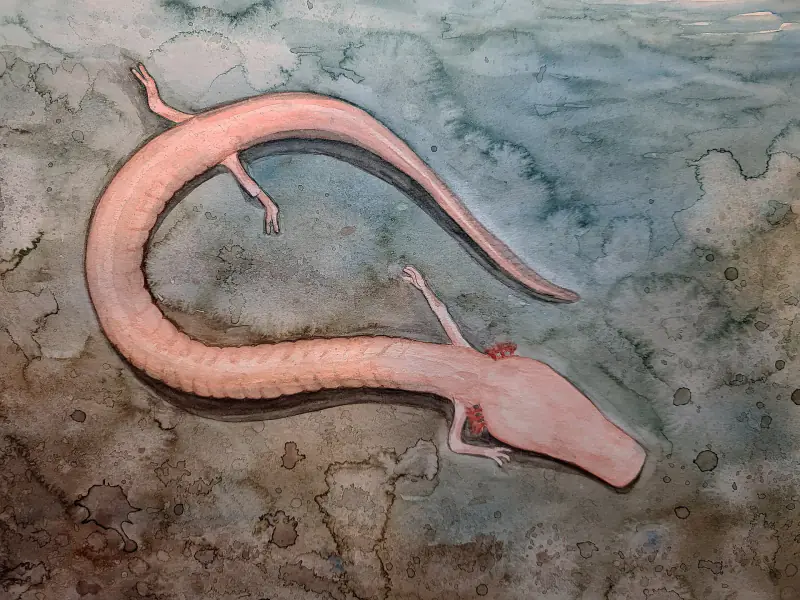
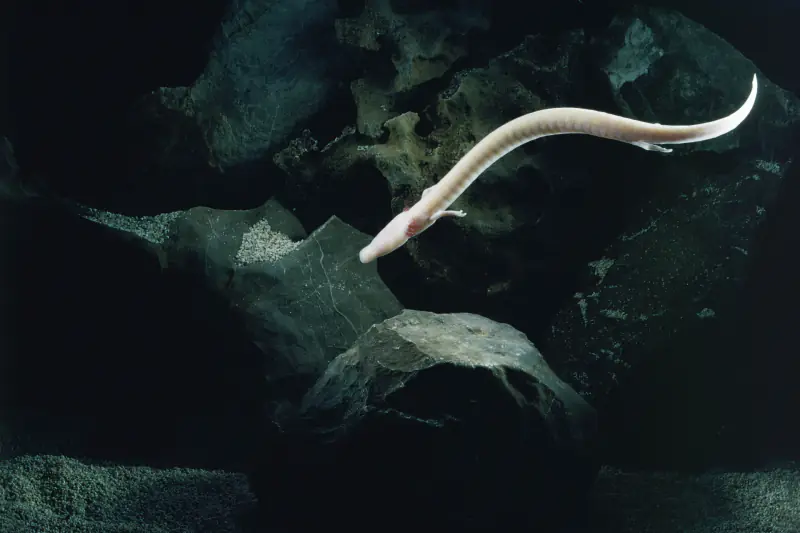
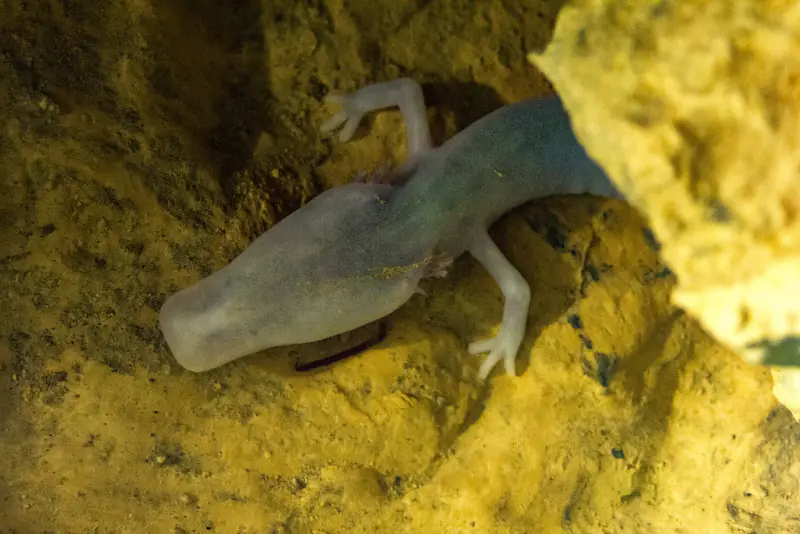
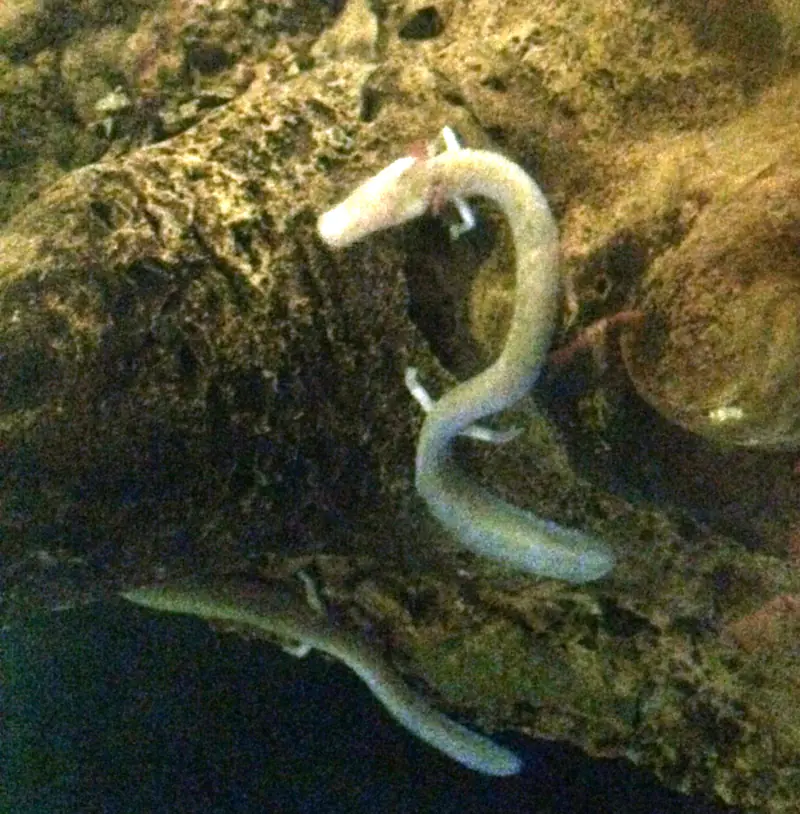
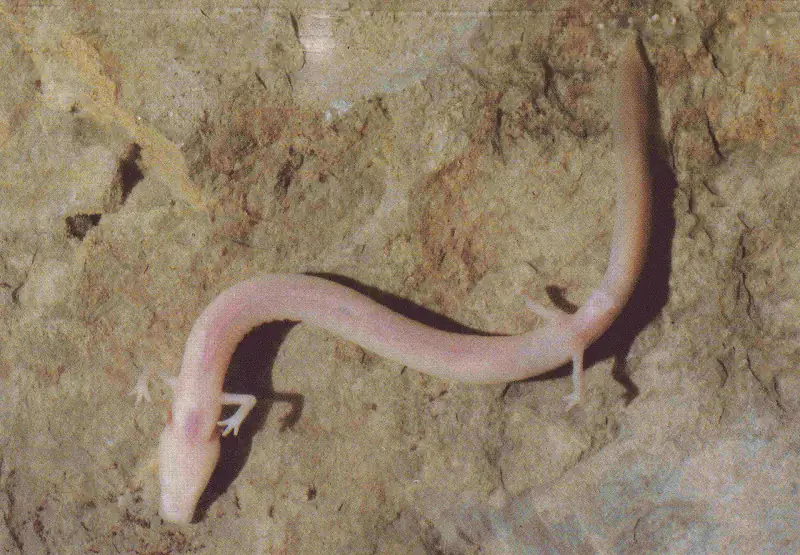
The olm is a salamander, 20 to 30 centimetres long, that spends its entire life in the underground waters of the Dinaric karst. It is the only vertebrate in Europe fully adapted to caves. Its skin has almost no pigment, so the blood shows through and gives it the pinkish tone that earned the Slovene name človeška ribica, 'human fish'.
Like the Mexican axolotl, the olm is neotenic: it becomes sexually mature while keeping the features of a larva. It never loses its three pairs of feathery red gills and never leaves the water.
Its eyes begin to form in the embryo and then regress, ending up buried under the skin. They can still tell light from dark, but the olm finds its way by other means: a keen sense of smell and taste, sensitivity to vibration, and organs in the head that detect weak electric fields.
The olm at a glance
- Scientific name
- Proteus anguinus
- Slovene name
- človeška ribica (human fish)
- Length
- 20–30 cm, occasionally more
- Lifespan
- up to about 100 years
- Range
- Dinaric karst, from north-east Italy to Bosnia and Herzegovina
- Habitat
- underground rivers and lakes, 8–12 °C
- Diet
- small crustaceans, snails, insect larvae
- Status
- vulnerable; strictly protected
A hundred years, one meal a decade
Everything about the olm is economical. Its metabolism is very low and it moves little. In laboratory conditions individuals have survived for around ten years without food.
It also ages slowly. Studies of a colony kept since the 1950s in a cave laboratory in the French Pyrenees suggest an average lifespan of nearly 70 years and a maximum of about a century, far beyond what would be expected for an amphibian of its size.
Eggs once in a dozen years
A female reaches maturity at around 15 years and thereafter lays eggs only about once every 12 years, a few dozen at a time, attaching them one by one to the underside of rocks. The larvae take several months to hatch.
This is almost never observed in nature. In 2016 a female in the aquarium at Postojna Cave laid a clutch in full view of visitors, and 22 young hatched. The event drew attention around the world.
A cousin with eyes
In 1986 researchers in Bela krajina, in south-east Slovenia, found olms that were dark brown to black, with a shorter head and small but working eyes. The black olm, Proteus anguinus parkelj, is known only from a few springs near Črnomelj, in an area of barely a few dozen square kilometres.
Its existence suggests that the pale form's blindness and lack of pigment evolved comparatively recently.
The olm in figures
From dragon to aquarium
- 1689
Dragon's young
Valvasor records that locals near Vrhnika took olms washed out by floods for the offspring of a dragon living inside the mountain.
- 1768
A name
The Viennese naturalist Josephus Nicolaus Laurenti publishes the first scientific description and names the animal Proteus anguinus.
- 1797
Found underground
The first olm is seen in its real habitat, inside a cave, in the Črna jama section of the Postojna system.
- 1859
Darwin's example
Charles Darwin mentions the olm in On the Origin of Species when discussing the loss of eyes in cave animals.
- 1986
The black olm
A pigmented, sighted subspecies is discovered in springs near Črnomelj.
- 2016
Hatching at Postojna
A clutch laid in the visitor aquarium at Postojna Cave produces 22 young.
Why it is at risk
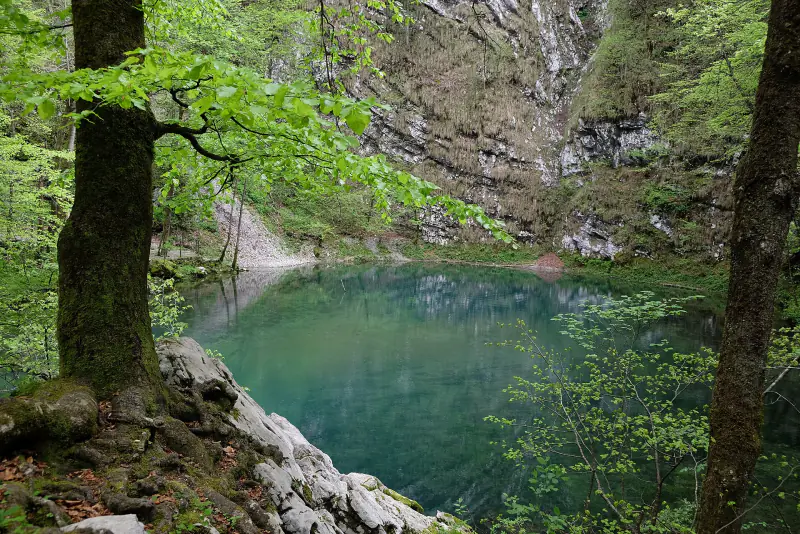
The olm depends on clean groundwater, and karst aquifers are exceptionally easy to pollute. Whatever is spilled, sprayed or dumped on the surface reaches the cave within hours or days, with almost no filtering.
The species is listed as vulnerable and is protected throughout its range. In Slovenia it has been protected since 1922. Catching, keeping or disturbing olms is illegal.
Meeting an olm
Postojna Cave
The vivarium beside the cave entrance and an aquarium on the tour route hold olms in dim light. This is the easiest and most reliable place.
In the wild
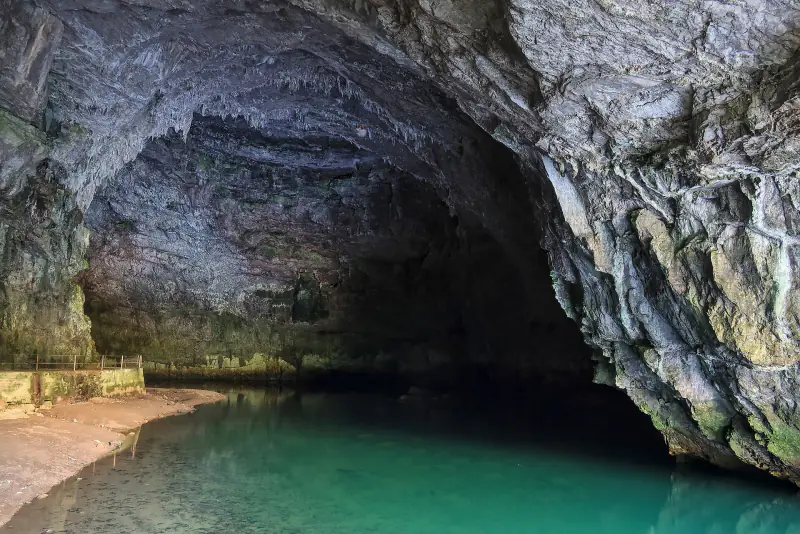
Olms live in Planina Cave, Križna jama and many other water caves, but are rarely visible on a standard tour. Never shine a strong light on one.
Bela krajina
Near Črnomelj, a small visitor centre at the Jelševnik spring shows the black olm by infrared camera without disturbing it.