Caves & early humans
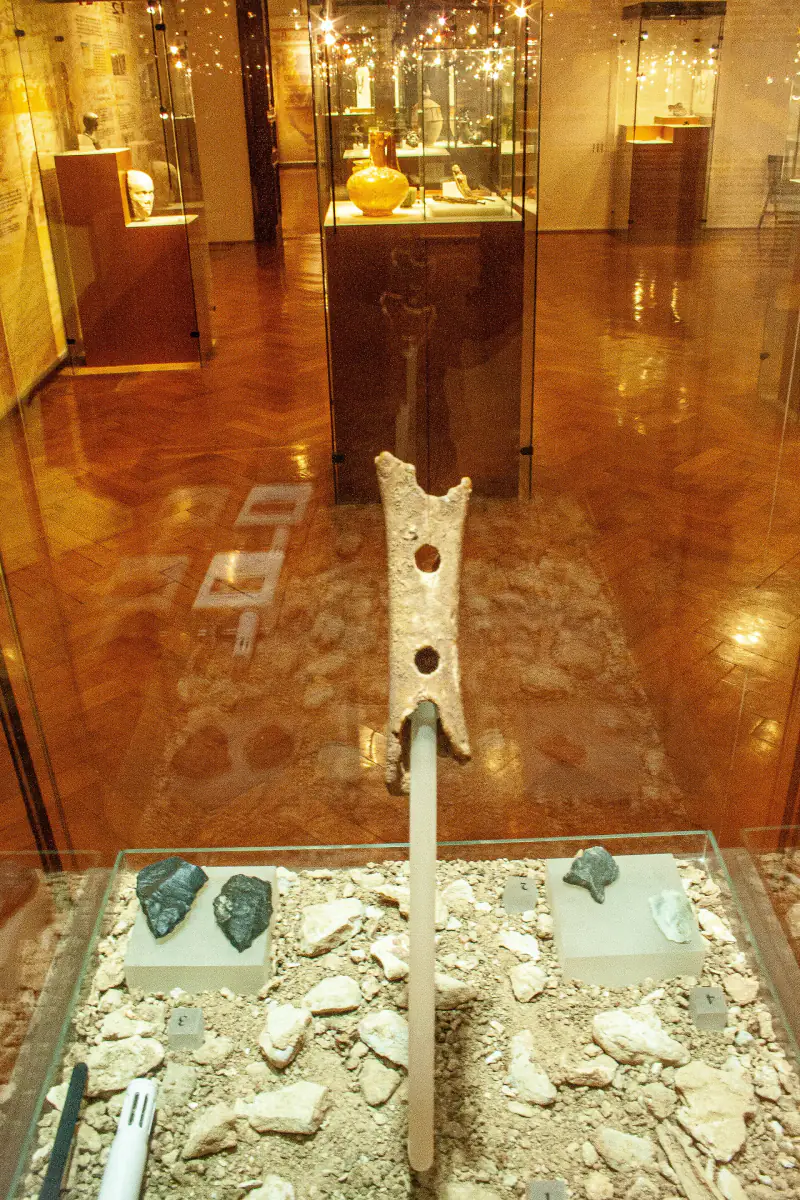
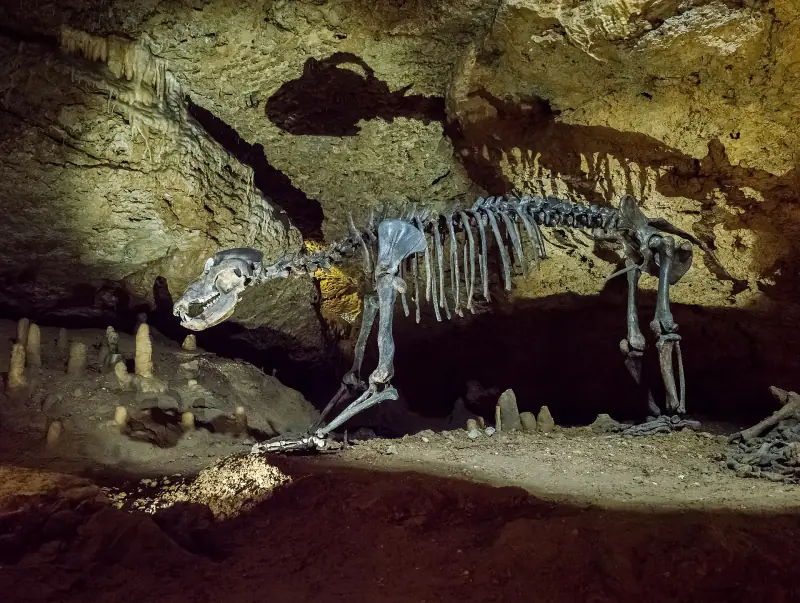
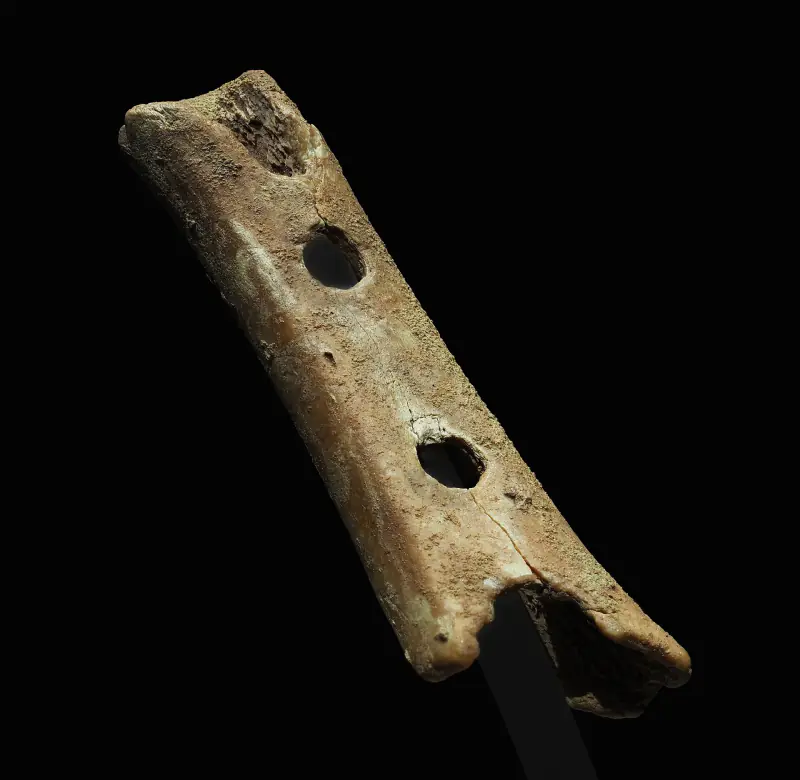
A cave-bear bone with a row of holes may be the oldest musical instrument in the world. Or it may not.
The oldest addresses in Slovenia
What people left behind in the entrance zone.
Cave mouths are dry, defensible and easy to find again, and people have used them for as long as there have been people here. Sediments on cave floors also preserve what open-air sites lose: bone, charcoal, tools.
Slovenian caves have produced evidence from the time of the Neanderthals through the first modern humans, the last hunter-gatherers and the earliest farmers, to Bronze Age worshippers who threw offerings into deep shafts.
A flute, or a chewed bone?
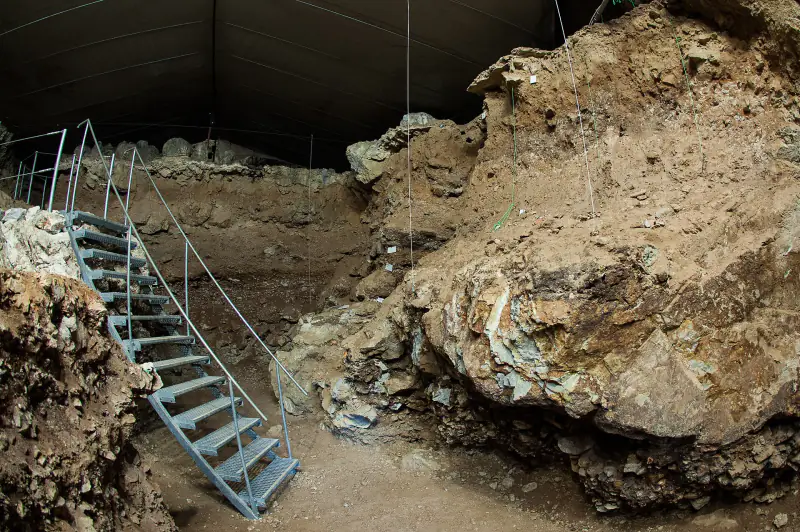
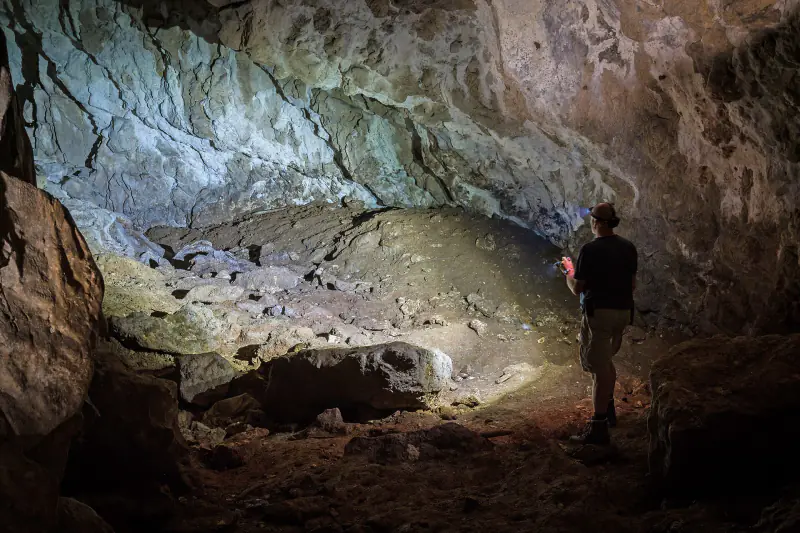
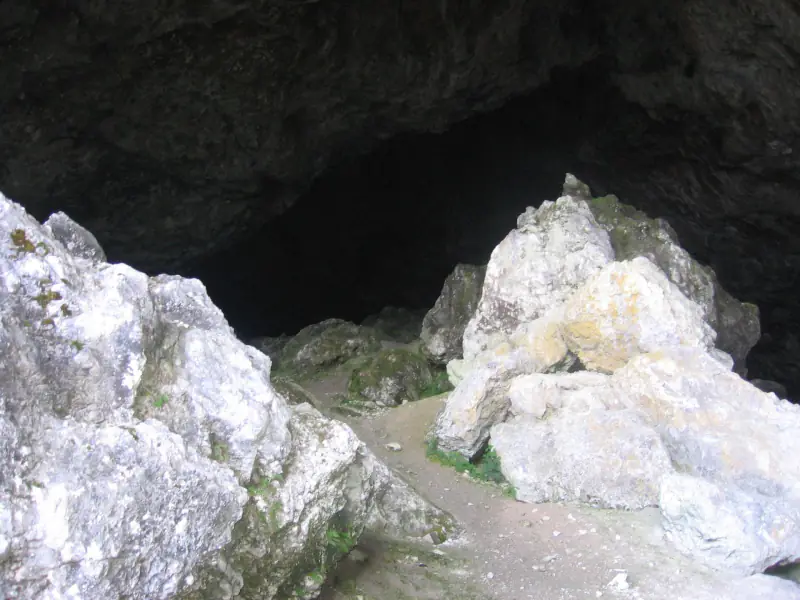
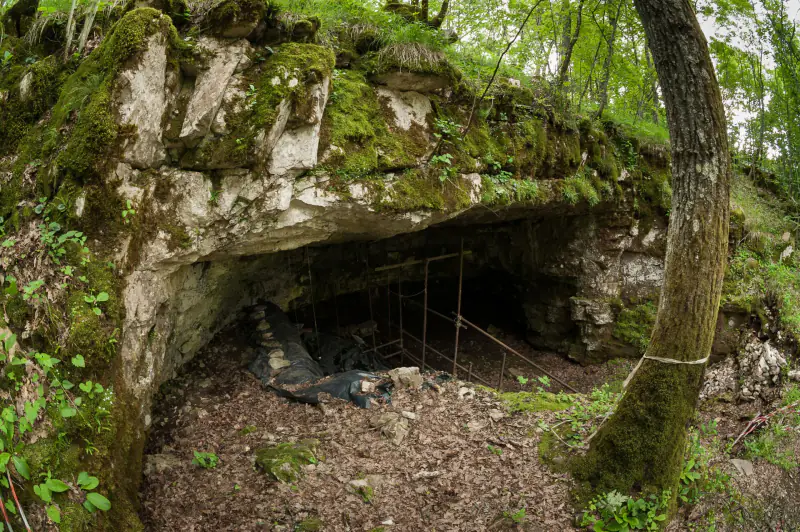
In 1995 archaeologists digging in Divje Babe I, a cave high above the Idrijca river near Cerkno, found the thigh bone of a young cave bear pierced by a line of round holes. It lay in a layer some 50,000 to 60,000 years old, associated with Neanderthal stone tools and hearths.
Its finder, Ivan Turk, interpreted it as a flute. If he is right, it is the oldest known musical instrument and proof that Neanderthals made music. Critics argue that the holes are tooth punctures made by a hyena or another carnivore. Experiments, scans and replicas have been marshalled on both sides, and the question remains open.
The bone is on display in the National Museum of Slovenia in Ljubljana.
Hunters at 1,700 metres
Potočka zijalka opens high on Mount Olševa in the Karawanks. Between 1928 and 1935 Srečko Brodar excavated it and found the remains of a great many cave bears together with more than a hundred bone points and a bone needle, left by early modern humans of the Aurignacian culture about 35,000 years ago.
The discovery showed that Ice Age hunters ranged far higher into the Alps than anyone had supposed. The cave can be reached on foot by a marked mountain path.
Offerings to the abyss
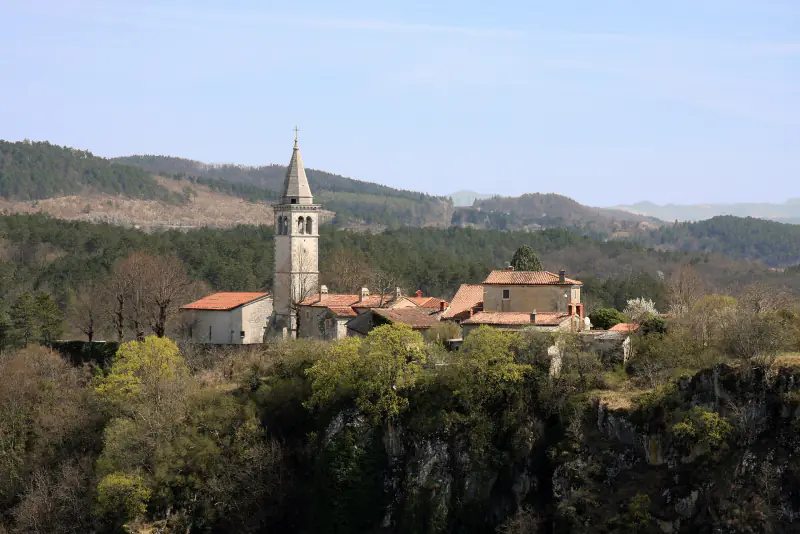
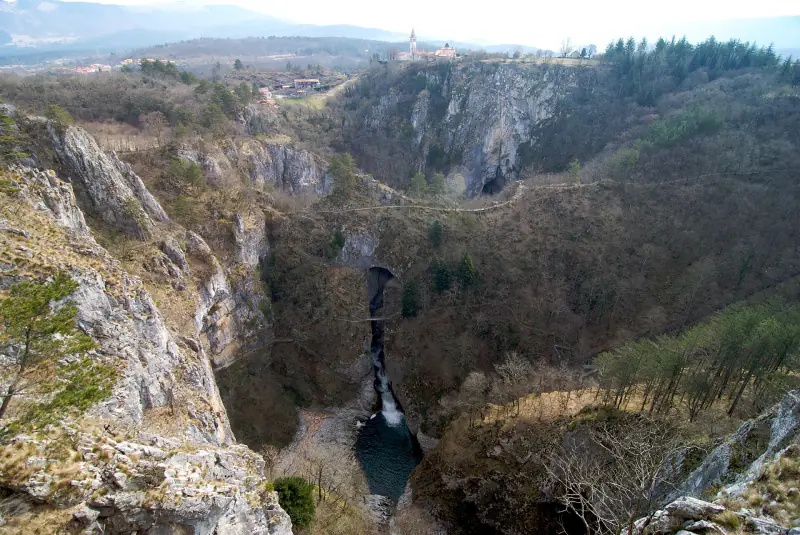
The area around the Škocjan Caves was a major centre in the late Bronze and early Iron Ages. In Mušja jama, a 50-metre shaft near the village, archaeologists recovered hundreds of bronze spearheads, swords, helmets and vessels, many deliberately broken or burned before being thrown in between the 12th and 8th centuries BC.
It appears to have been a sanctuary of more than regional importance, drawing objects from Italy, the Aegean and the Danube basin.
From hunters to herders
Rock shelters such as Mala Triglavca near Divača were occupied repeatedly for thousands of years. Their layers record the shift from Mesolithic hunter-gatherers to Neolithic communities who penned sheep and goats in caves, a practice that continued on the Karst into historical times.
Deep time
Where to go
National Museum of Slovenia
The Divje Babe bone is displayed in Ljubljana alongside other Palaeolithic finds.
Divje Babe archaeological park
The cave near Cerkno can be visited on guided tours in season. The path up is steep.
Škocjan Caves Park
Small museum collections in the village of Škocjan present the archaeology of the caves and dolines.
In pictures