History of exploration
From names scratched by candlelight in 1213 to a 603-metre shaft descended in 1996.
From curiosity to science
The people who went further.
People have always used cave entrances. Going further in, on purpose and with a notebook, is a habit of the last three or four hundred years, and the caves of Carniola, as this region was then called, were among the first anywhere to be explored and described in that spirit.
The reasons were partly practical. The main road from Vienna to the port of Trieste ran straight across the karst, so a steady stream of educated travellers passed its sinking rivers and cave mouths and wrote about them.
Key dates underground
Eight centuries, from soot signatures to laser surveys.
- 1213
The earliest signature
The oldest dated graffiti in the Passage of Old Signatures in Postojna Cave is usually read as 1213. Visitors left their names in soot and pencil for the next six centuries.
- 1633
The first show cave
The parish of Lokev begins charging admission to Vilenica Cave, the earliest organised cave tourism known in Europe.
- 1689
Valvasor
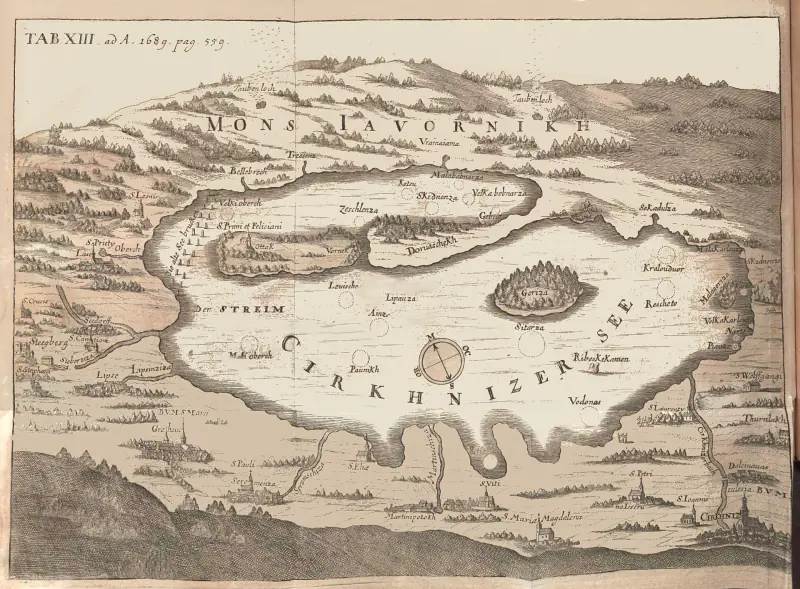
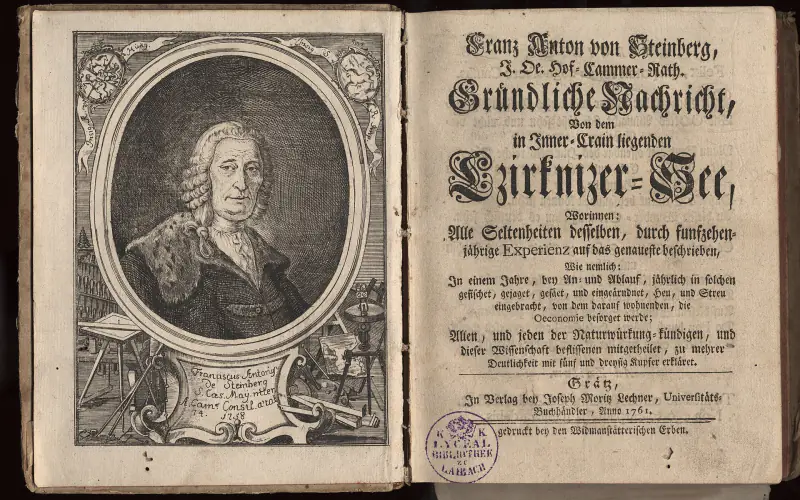
Johann Weikhard von Valvasor publishes The Glory of the Duchy of Carniola, with descriptions of Lake Cerknica, dozens of caves and the first account of the olm.
- 1748
An imperial survey
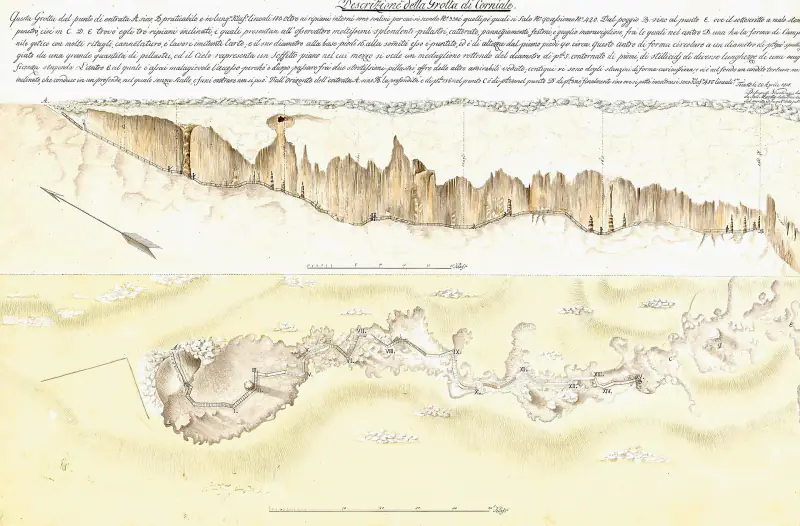
The court mathematician Joseph Anton Nagel is sent by Emperor Francis I to investigate the natural curiosities of Carniola. He produces some of the earliest measured drawings of its caves.
- 1818
Luka Čeč
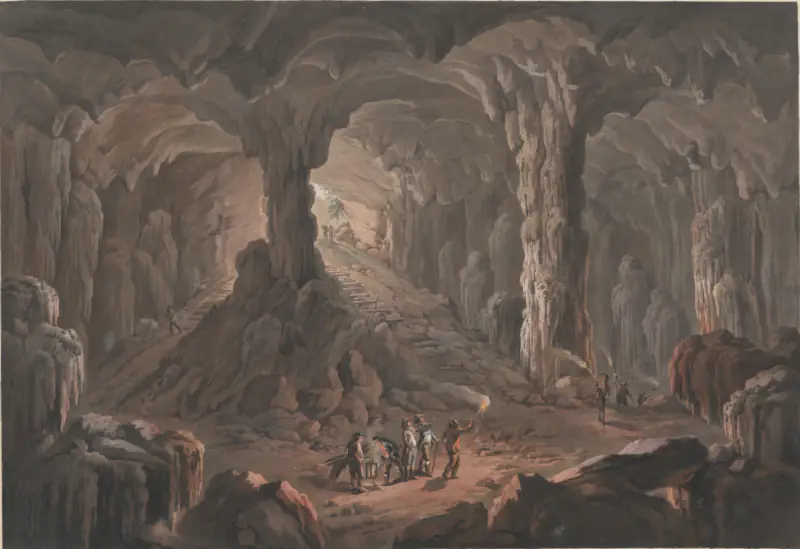
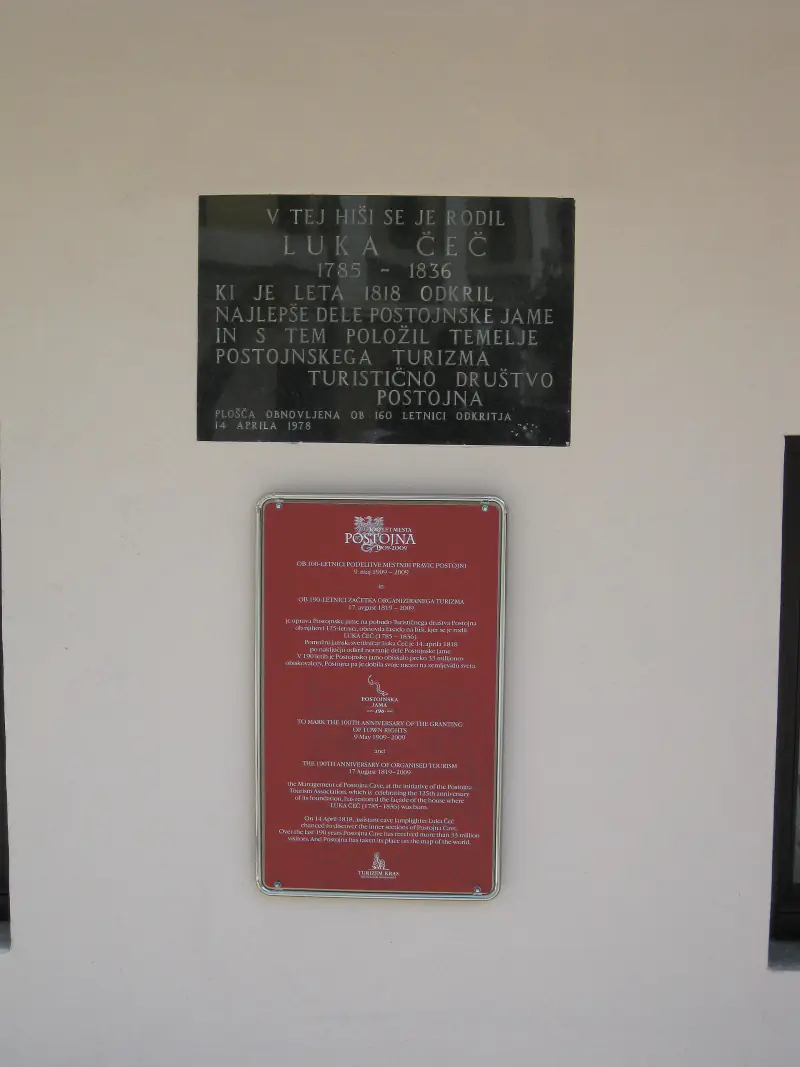
While helping to prepare Postojna Cave for a visit by Emperor Francis I of Austria, the lamplighter Luka Čeč climbs into unknown passages and discovers the main part of the cave. It opens to the public the following year.
- 1831
A blind beetle
Čeč finds Leptodirus hochenwartii, the first known cave-adapted animal. Cave biology begins.
- 1850s
Adolf Schmidl
The Viennese geographer Adolf Schmidl surveys Postojna, Planina, Predjama and Škocjan by boat and on foot, and publishes the first scientific monograph on the caves in 1854. He is often called the father of modern speleology.
- 1872
A railway underground
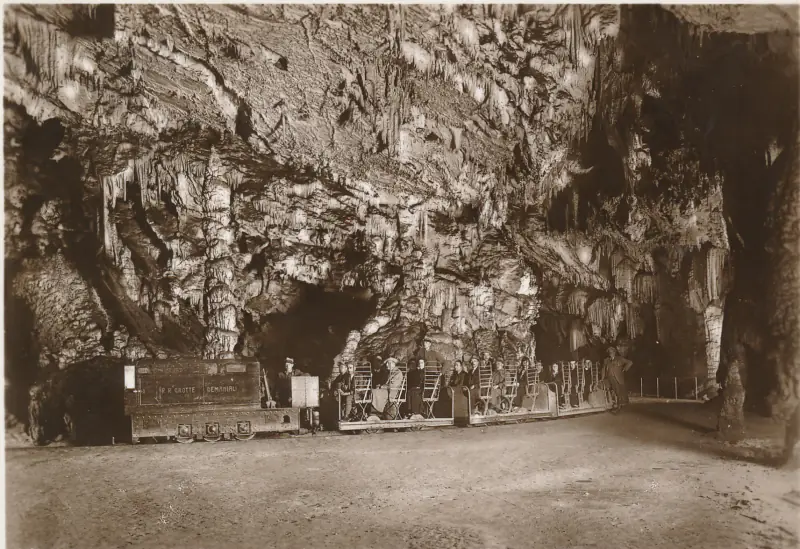
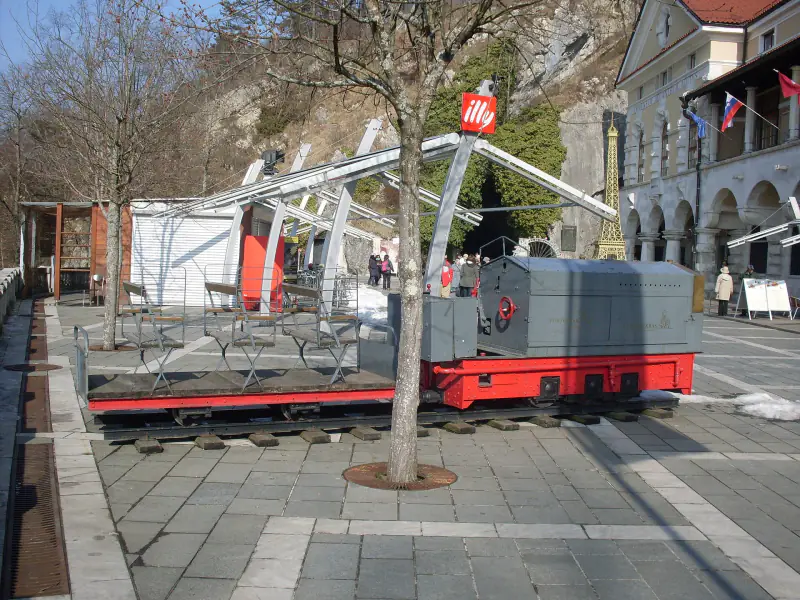
Tracks are laid in Postojna Cave. Guides push visitors in small wagons.
- 1884
Electric light
Postojna Cave is lit by electricity, ahead of most cities in the region. In the same decade Anton Hanke and his colleagues push down the Reka canyon at Škocjan.
- 1889
The first caving club
The society Anthron is founded in Postojna, the first caving organisation in the Slovene lands.
- 1893
Martel
Édouard-Alfred Martel, the French pioneer of cave exploration, crosses the underground Pivka in a collapsible boat and links parts of the Postojna system.
- 1910
A national society
The Society for Cave Exploration is founded in Ljubljana. Its successor is still one of the country's most active clubs.
- 1947
The Karst Research Institute
A research institute devoted to karst is established in Postojna. It remains a world centre for the subject.
- 1965
The world comes to Postojna
The Fourth International Congress of Speleology meets in Slovenia. The International Union of Speleology is founded there.
- 1986
World Heritage
The Škocjan Caves are inscribed on the UNESCO World Heritage List.
- 1996
Vrtoglavica
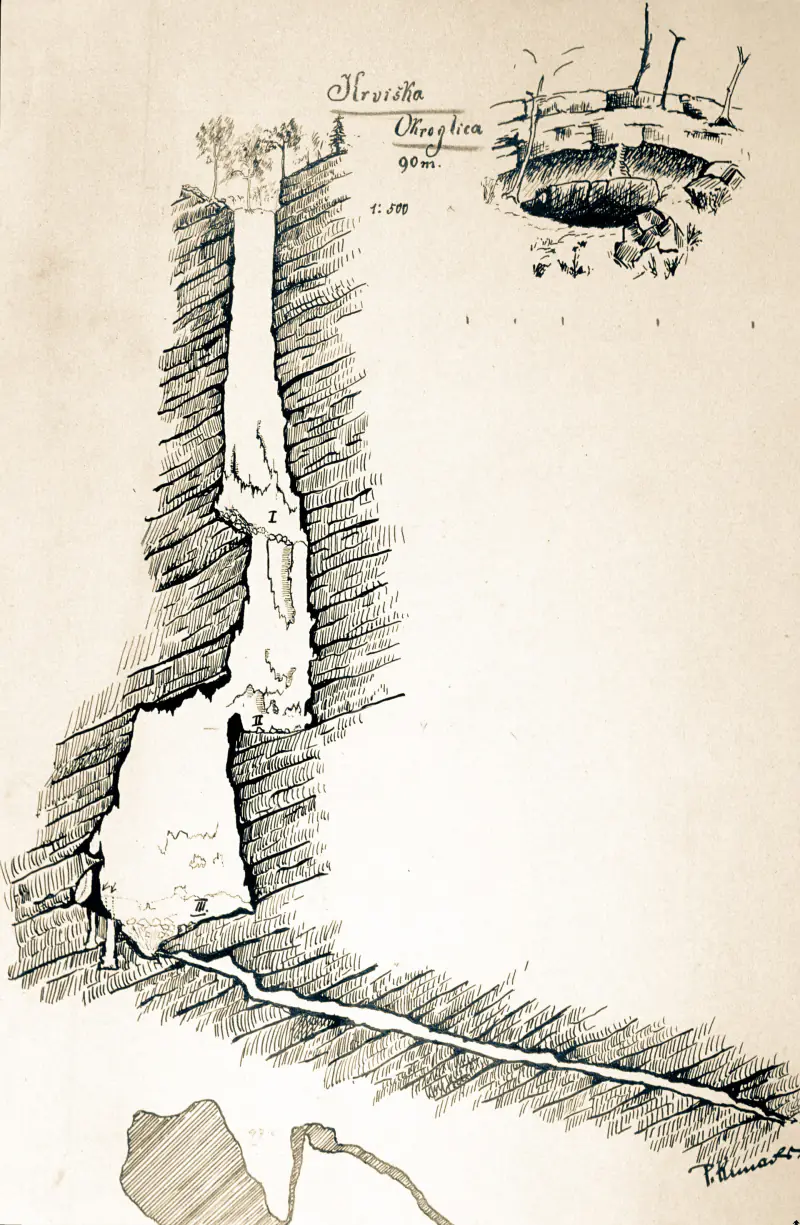
A 603-metre shaft, the deepest single pitch known in the world, is descended on Mount Kanin.
The men who followed the Reka
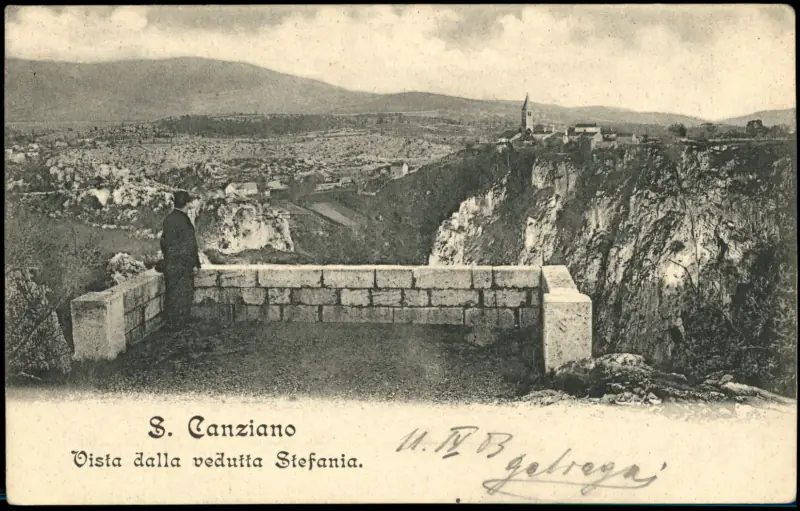
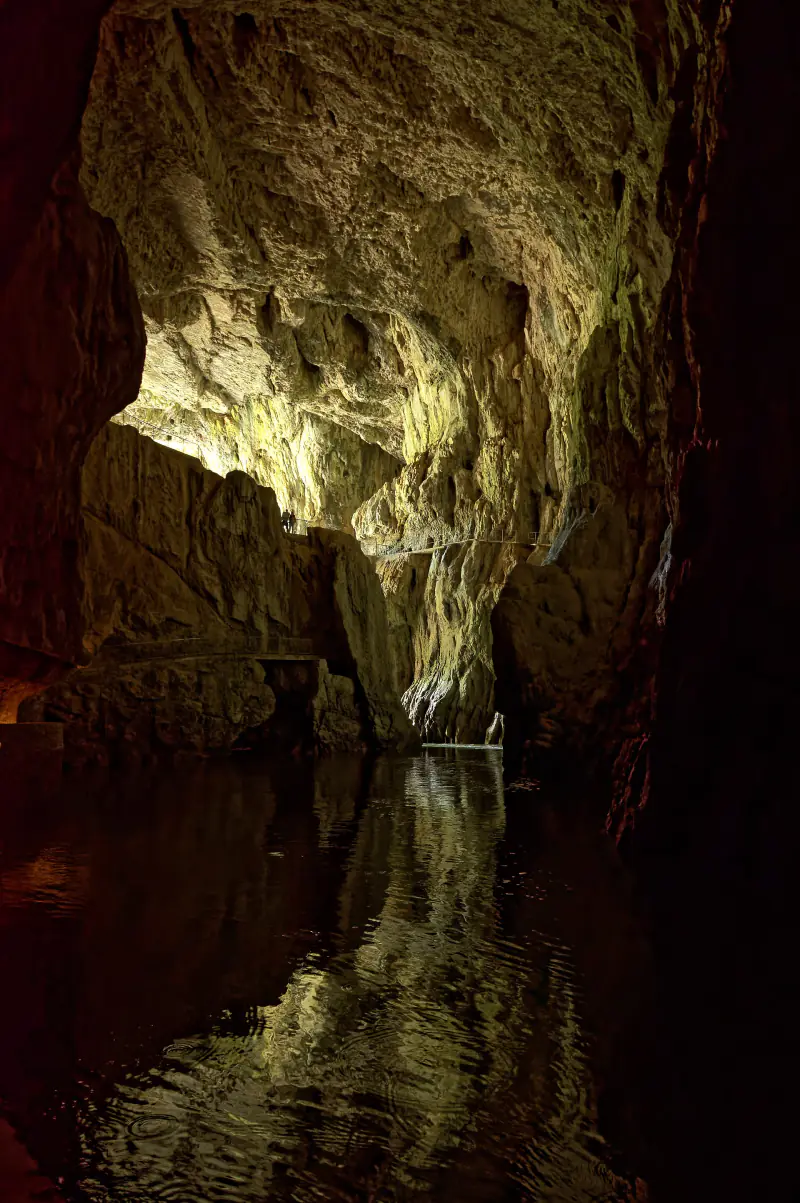
The exploration of the Škocjan canyon in the 1880s and 1890s was one of the great feats of early caving. A small team from the Littoral section of the German and Austrian Alpine Club, led by Anton Hanke with Josef Marinitsch and Friedrich Müller, worked with local men from the surrounding villages.
They cut paths into sheer walls high above a river that can rise tens of metres in a flood, and advanced waterfall by waterfall. In 1890 they reached the Dead Lake, where the canyon ends in a sump. The Hanke Channel bears their leader's name.
Two centuries of visitors
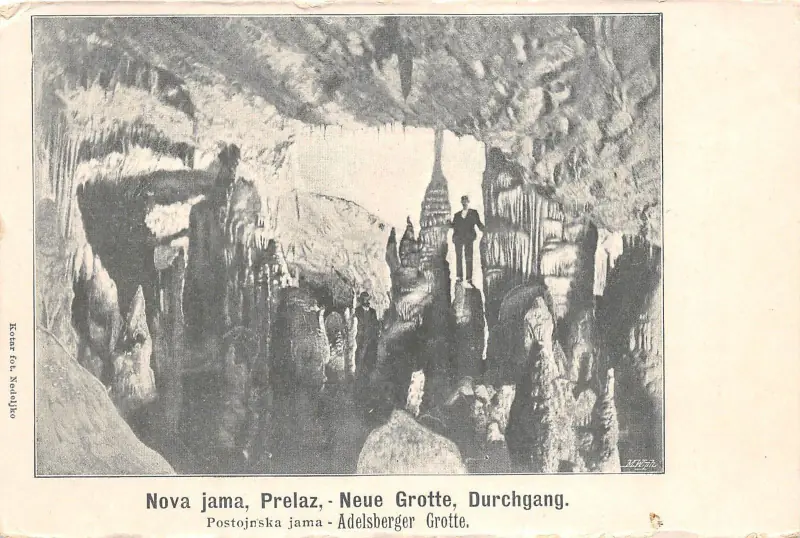
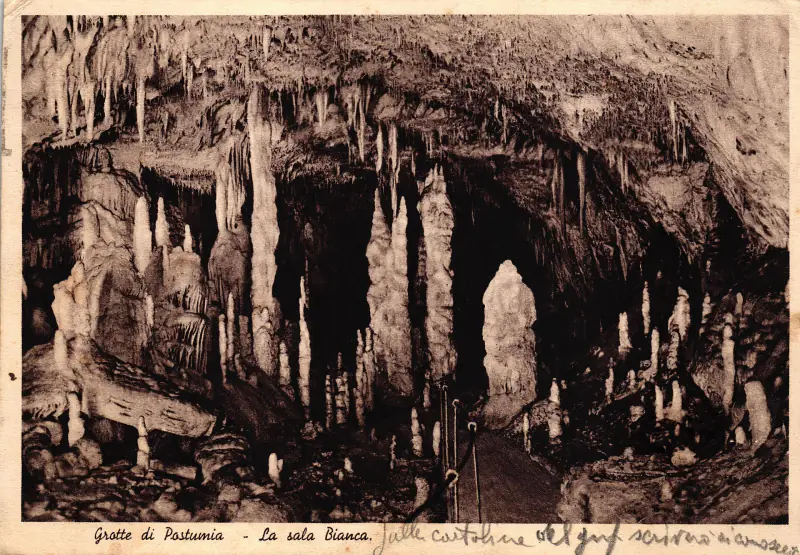
Postojna shows how early cave tourism became an industry. Within a year of Čeč's discovery there were paths, a visitors' book and official guides. Later came a railway, electric light and a post office underground. Emperors, kings and, eventually, tens of millions of ordinary travellers followed.
The postcards they sent home are now a historical source in their own right.
Still finding more
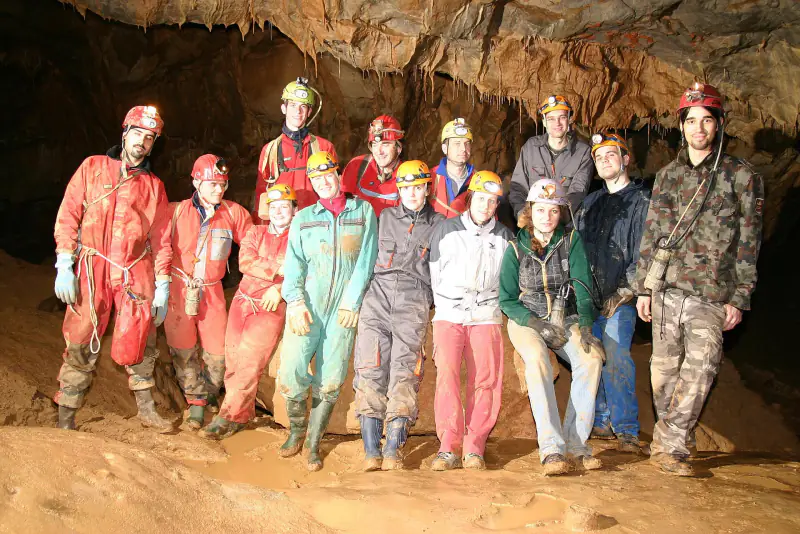
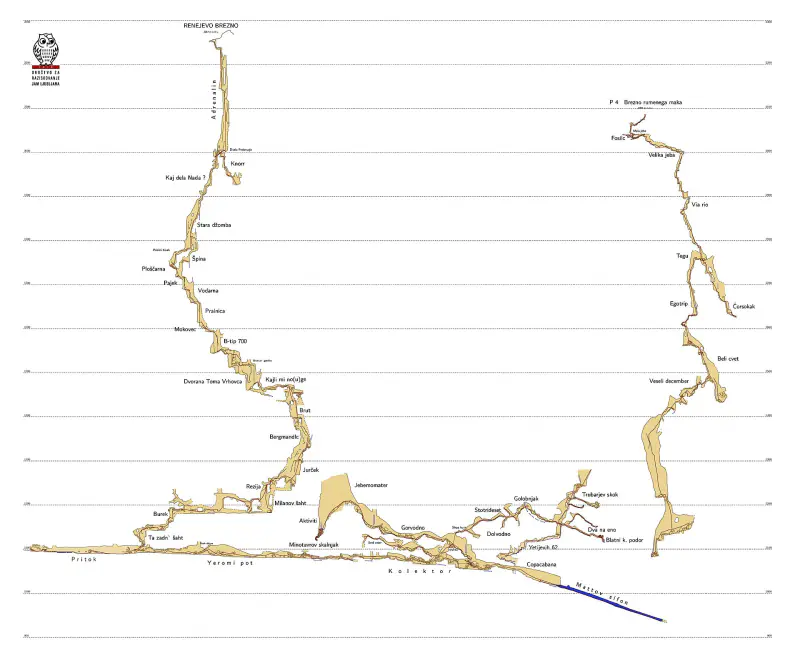
Slovenia's cave register lists more than 14,000 caves, and cavers add well over a hundred new entries every year. The work is done almost entirely by volunteers in several dozen clubs, who survey what they find and deposit the results in a national archive.
The longest and deepest caves in the country were all explored within living memory.
Here is a new world, here is paradise!Words attributed to Luka Čeč on returning from the newly found passages of Postojna Cave, April 1818
The record on paper