The karst
Disappearing lakes, natural bridges, rivers that change their name each time they surface. The landscape that gave the world the word karst.
Read the surface, understand the caves
The pages in this section cover the landscape between the caves, most of it free to explore on foot.
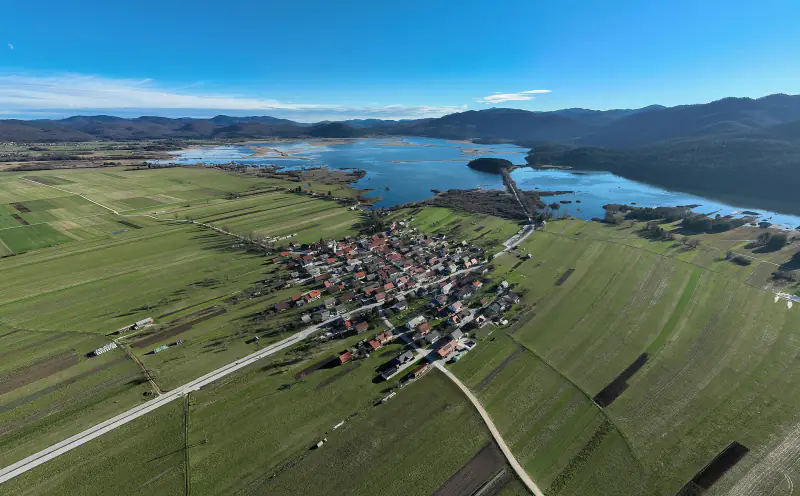
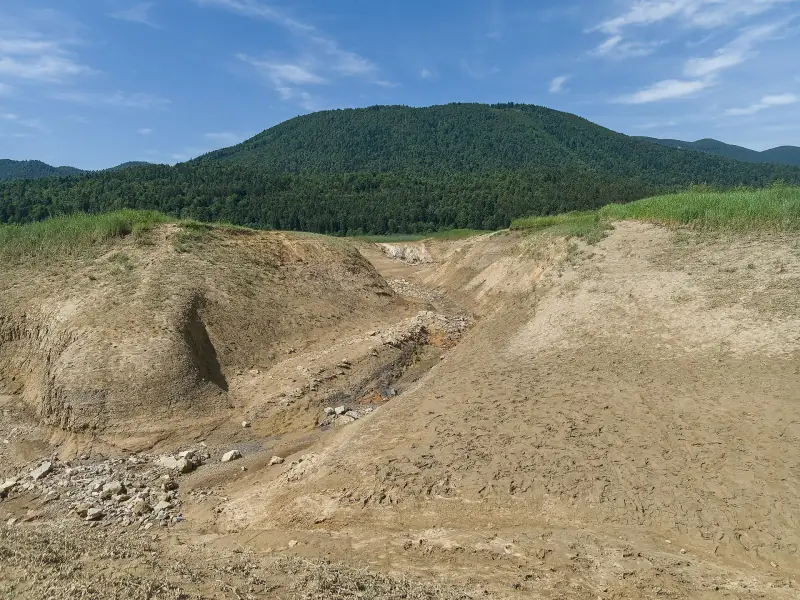
Almost half of Slovenia is karst: terrain where rainwater dissolves the bedrock and drains underground rather than across the surface. The signs are easy to learn. Rivers end abruptly at cliffs. Valleys have no outlet. Fields are pocked with funnel-shaped hollows, and lakes fill and empty with the seasons.
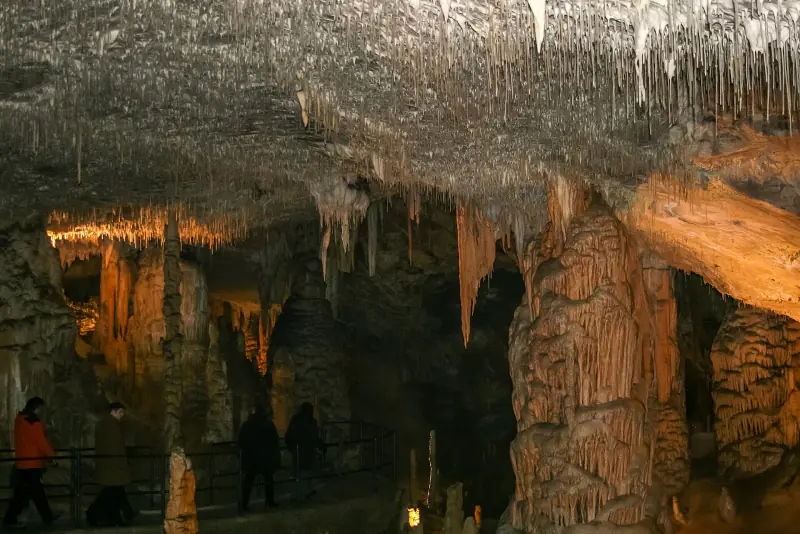
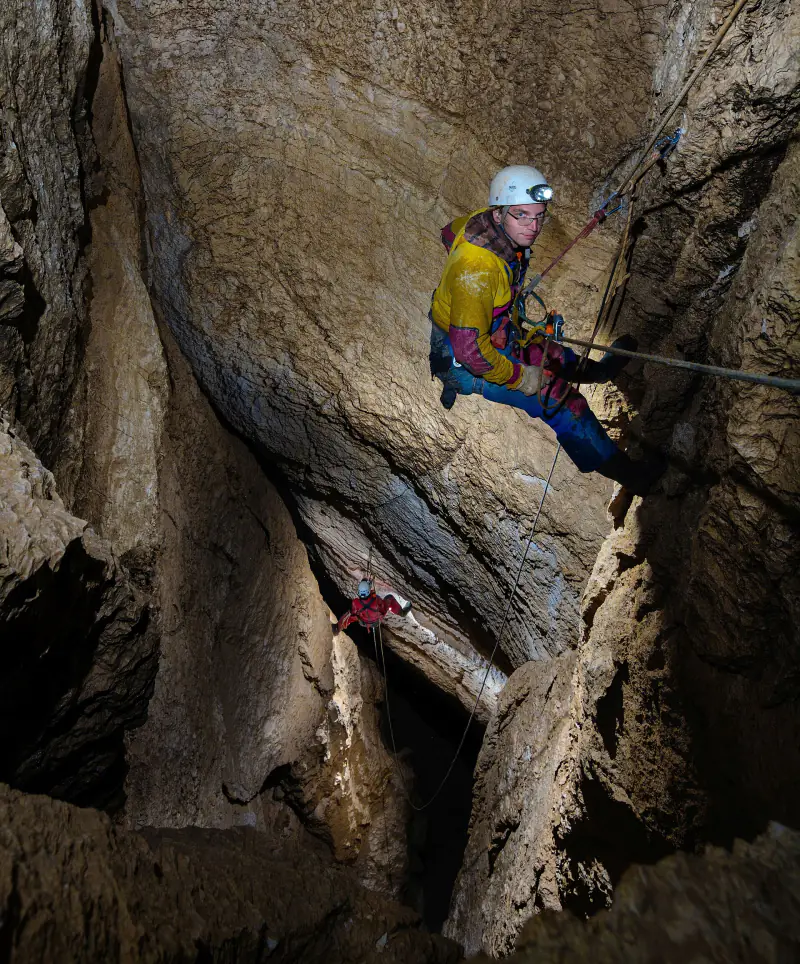
Geographers distinguish three kinds here. The Dinaric karst of the south and west is the classic type, with its plateaus, poljes and long river caves. The Alpine karst of the Julian and Kamnik–Savinja Alps is high, bare and deep, the home of kilometre-deep shafts. Scattered patches of isolated karst elsewhere hold smaller caves such as Pekel and Kostanjevica.
of the country's surface is karst
types of karst: Dinaric, Alpine and isolated
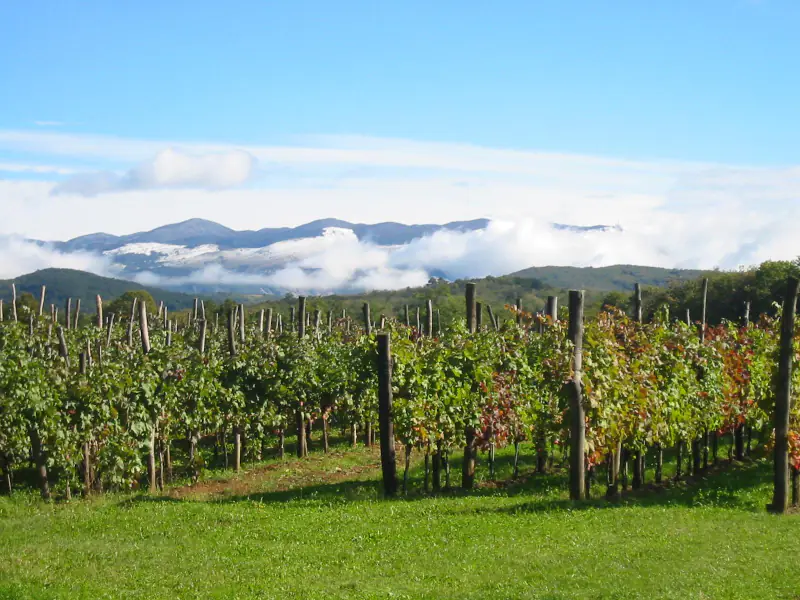
roughly half of Slovenia's drinking water comes from karst aquifers
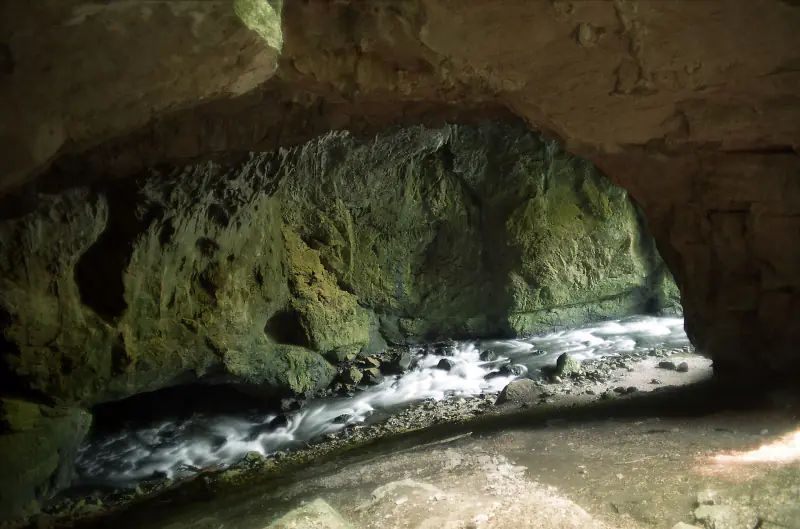
The river of seven names
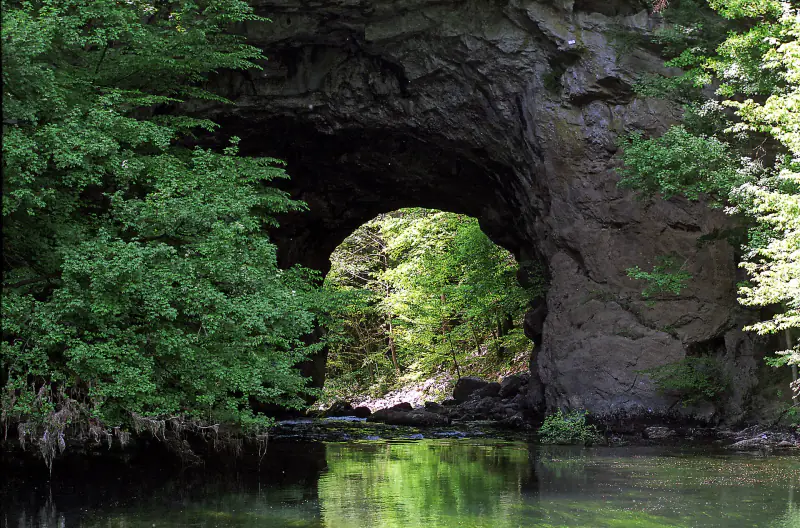
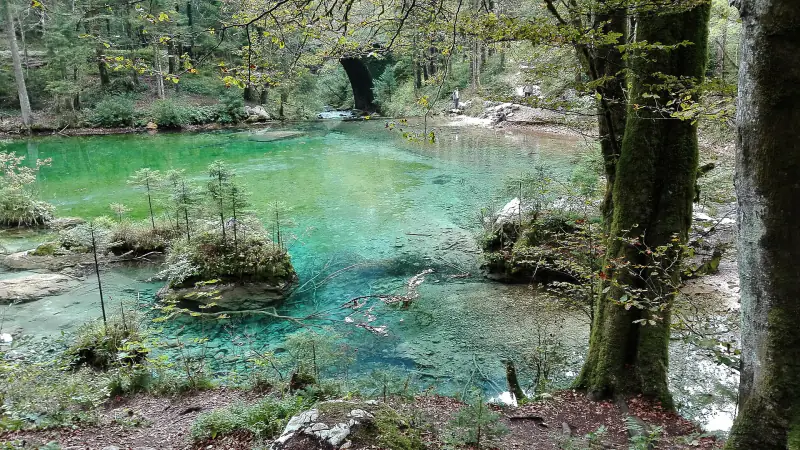
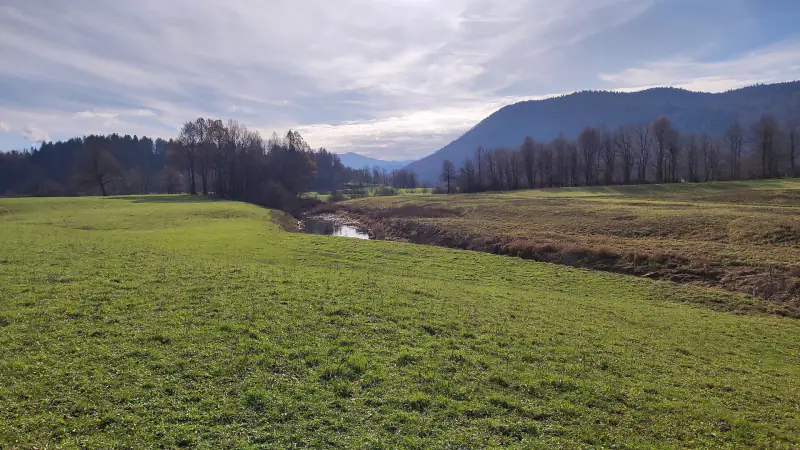
The Ljubljanica, which flows through the capital, is said to be a river of seven names. Its water first surfaces near Snežnik as the Trbuhovica, then sinks and reappears in turn as the Obrh, the Stržen (across Lake Cerknica), the Rak (through Rakov Škocjan), the Pivka (through Postojna Cave), the Unica (out of Planina Cave) and at last, at Vrhnika, the Ljubljanica.
Following it across the map is the best single introduction to the Slovenian karst.
Words the world borrowed
When 19th-century geographers began to describe limestone landscapes systematically they did so here, and took their terms from the local languages. Karst is the German form of Kras. Doline, polje, ponor and uvala are South Slavic words now used in textbooks from China to Kentucky.
See it in a weekend
Lake Cerknica, Rakov Škocjan and Križna jama lie within 20 minutes of each other.