Postojna Cave
Twenty-four kilometres of passages carved by the Pivka river, an underground railway running since 1872, and the best place to see a living olm.
The cave that made karst famous
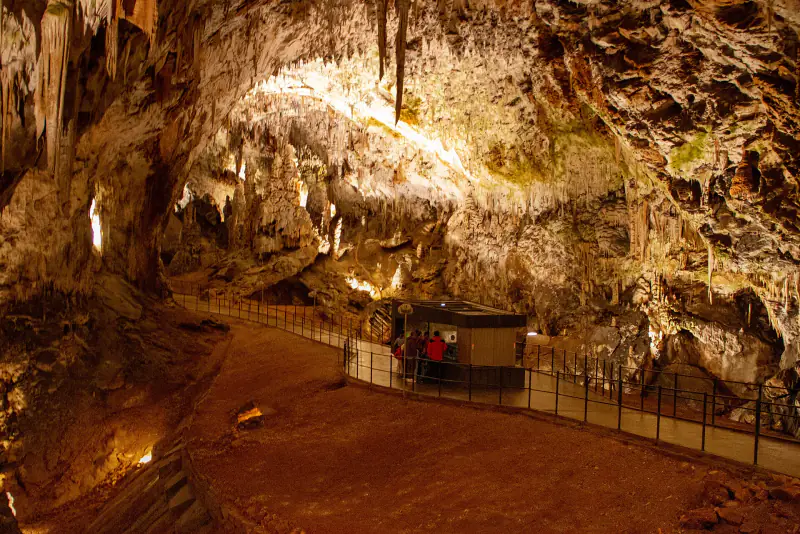
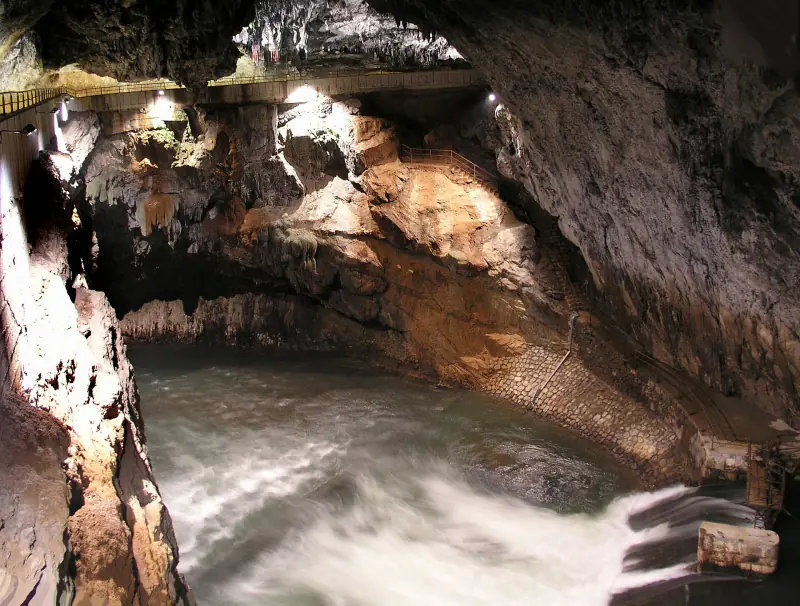
Postojna Cave is the best-known cave in Slovenia and one of the most visited in Europe: around forty million people have toured it in two centuries. It was hollowed out by the Pivka, which still flows through the lowest level of the system on its way to Planina Cave.
People had known the entrance passages for centuries; visitors' signatures on the walls go back to the 13th century. The cave as it is visited today was found in April 1818, when a local lamplighter named Luka Čeč climbed a rock wall during preparations for an imperial visit and came back, the story goes, announcing that he had found a new world.
Postojna Cave at a glance
- Slovene name
- Postojnska jama
- Location
- Postojna, about 50 km south-west of Ljubljana
- System length
- about 24 km
- Visitor route
- about 5 km, of which 3.7 km by train
- Temperature
- 8–10 °C all year
- Open to visitors since
- 1819
- Cave railway since
- 1872
- Electric lighting since
- 1884
Into the cave by train
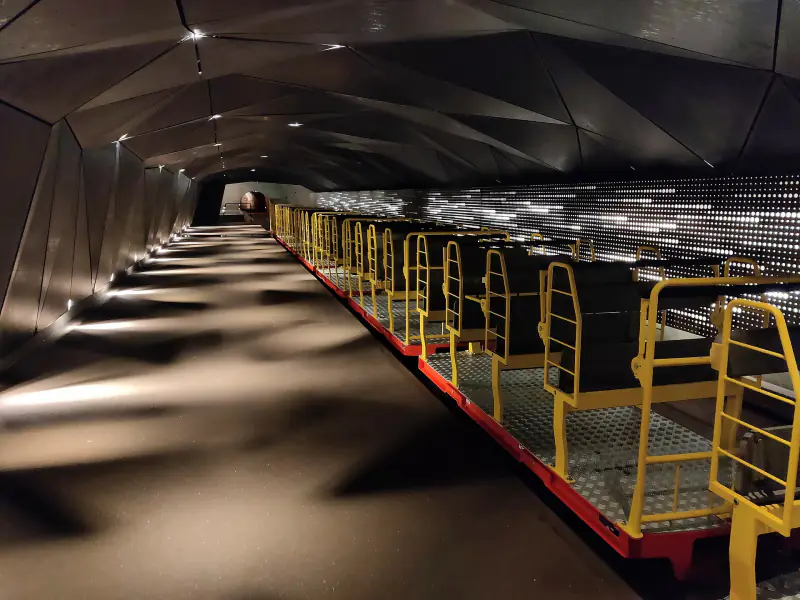
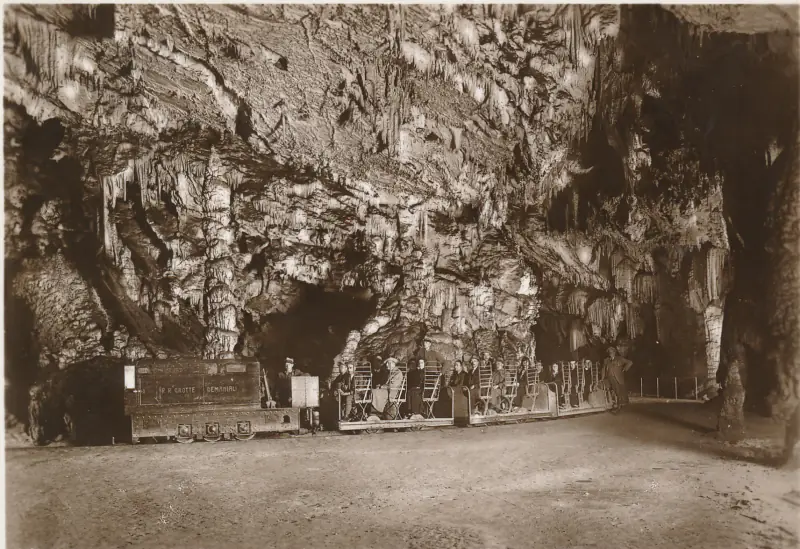
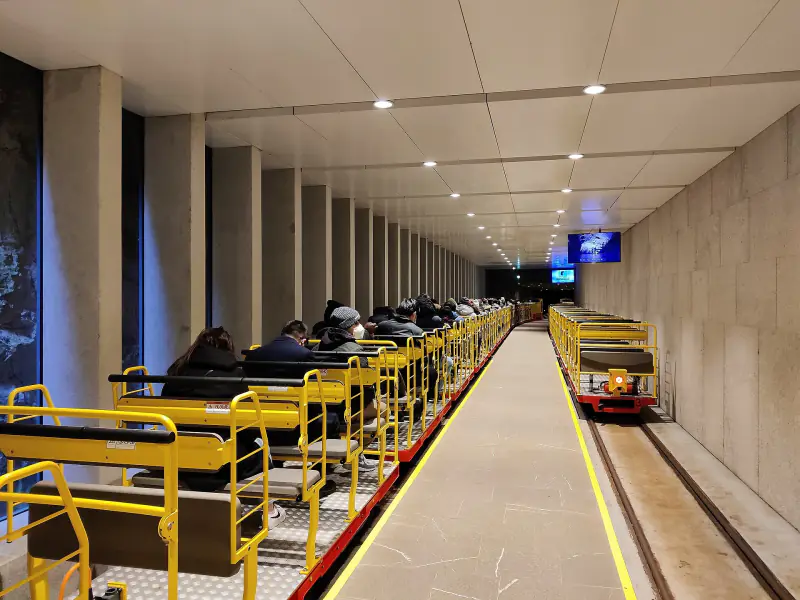
The first tracks were laid in 1872, and guides pushed visitors in two-seat wagons by hand. Petrol locomotives arrived in the 1920s and battery-electric trains in the 1950s. Today open carriages run a double-track loop.
The ride takes about ten minutes each way and passes through the Congress Hall and a section still blackened by a fire in 1944, when a German fuel depot stored in the entrance was blown up by partisans.
The Great Mountain and the Beautiful Caves
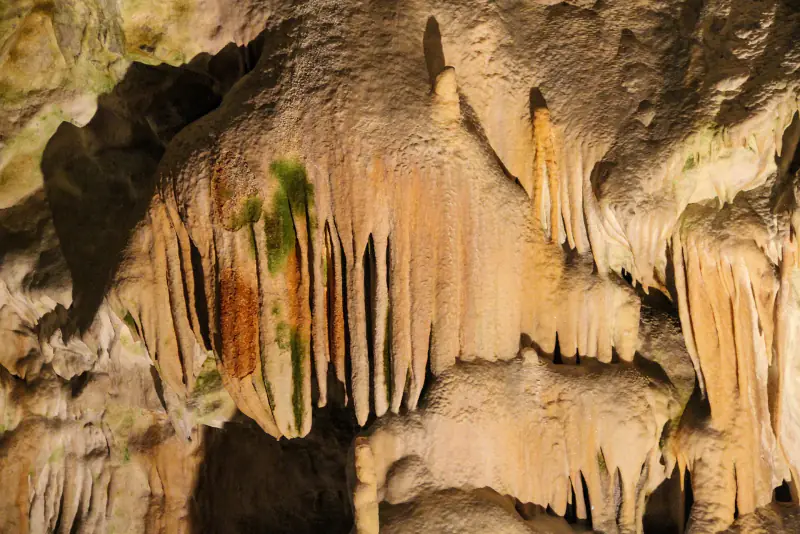
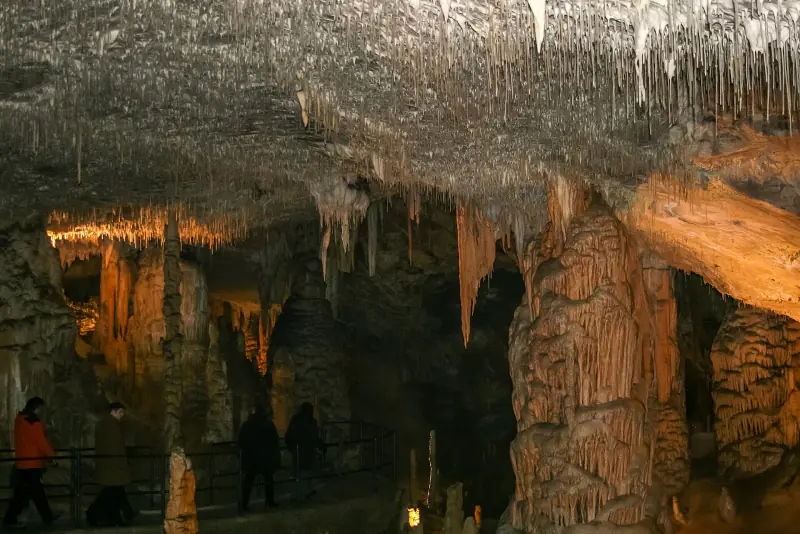
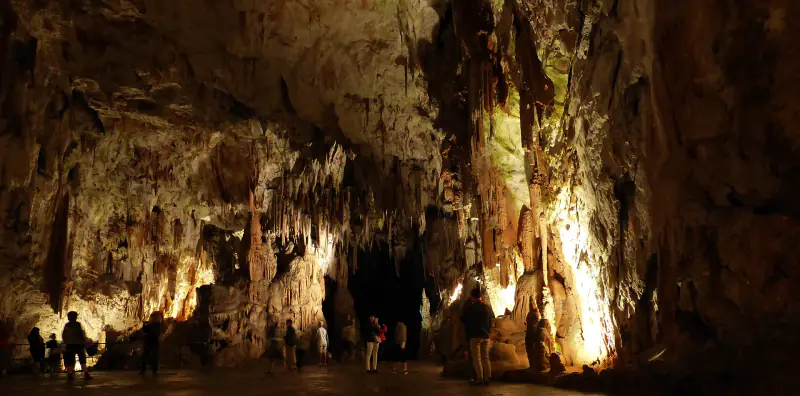
From the inner station the path climbs the Great Mountain, a pile of collapsed ceiling 45 metres high that is now coated in stalagmites. It then crosses the Russian Bridge, built by prisoners of war during the First World War, into the Beautiful Caves.
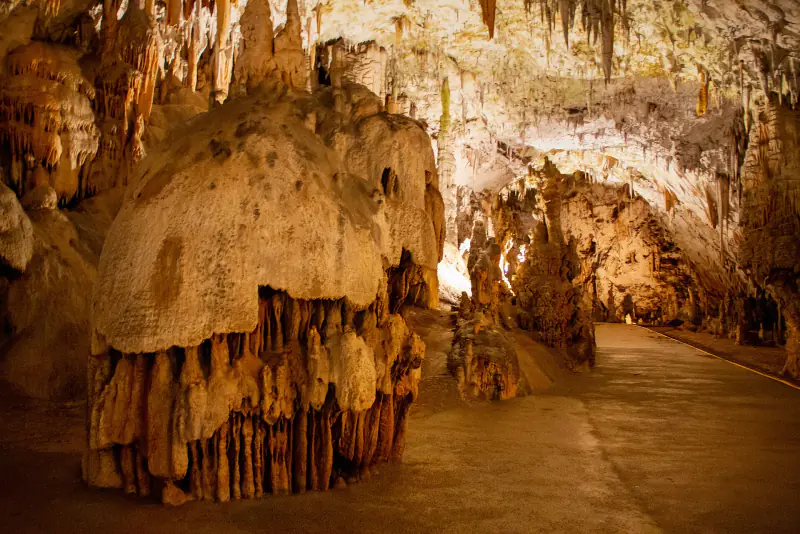
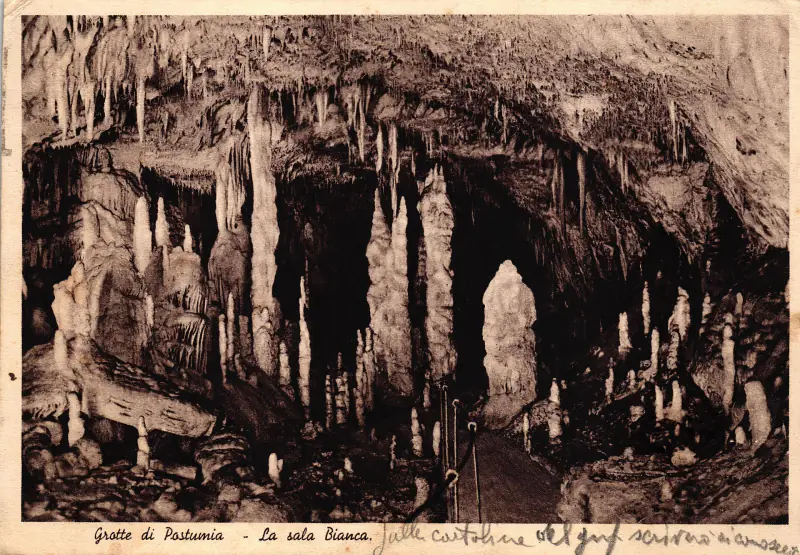
Here the halls are named for what covers them: the Spaghetti Hall for its thousands of hollow straw stalactites, the White Hall and the Red Hall for the colour of the calcite.
The Brilliant and the Concert Hall
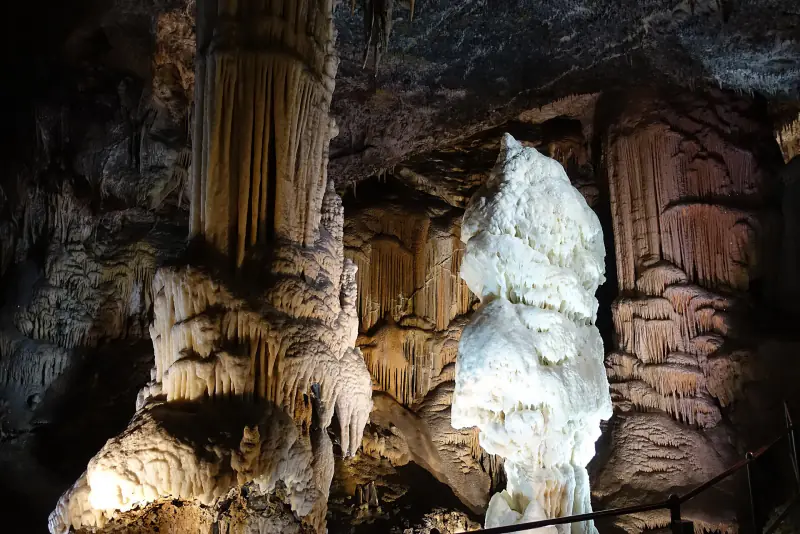
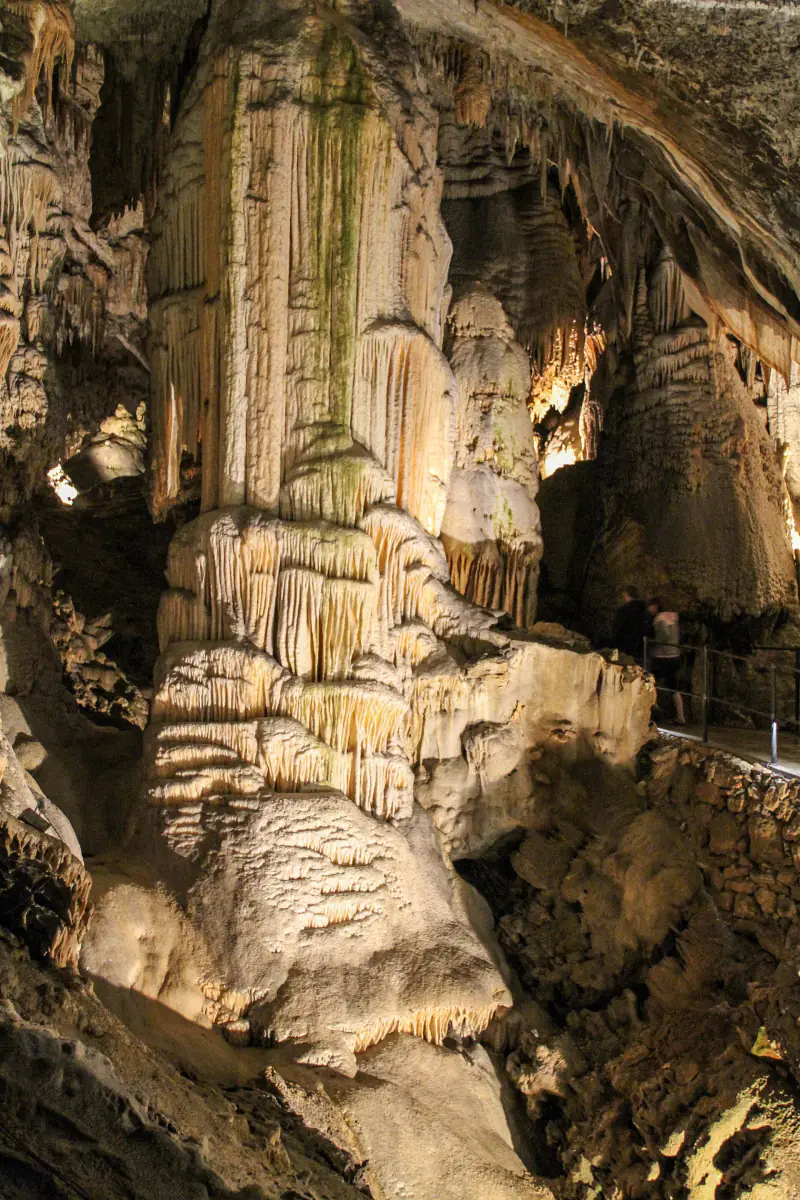
Near the end of the walk stands the Brilliant, a five-metre stalagmite kept dazzlingly white by a thin film of water that still deposits calcite. Beside it rises a ribbed column of quite different shape, formed by faster, less regular dripping.
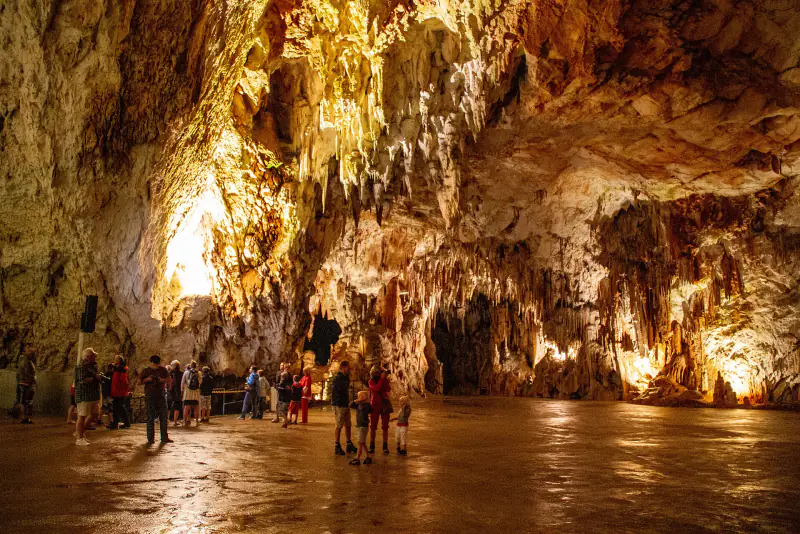
The tour ends in the Concert Hall, which is large enough to hold several thousand people and is still used for music. A vivarium by the route shows olms and other cave animals.
Postojna Cave in figures
Inside and around Postojna Cave
Select a photograph to enlarge it. All images are freely licensed; authors are listed in the photo credits.
Before you go
Getting there
Postojna is on the A1 motorway between Ljubljana and the coast, about 40 minutes from the capital. Trains and buses from Ljubljana stop in the town; the cave is roughly a 20-minute walk from the centre.
On the tour
Tours are guided, last about an hour and a half and run in several languages. The route is step-free for most of its length, which makes this the most accessible of Slovenia's big caves.
Good to know
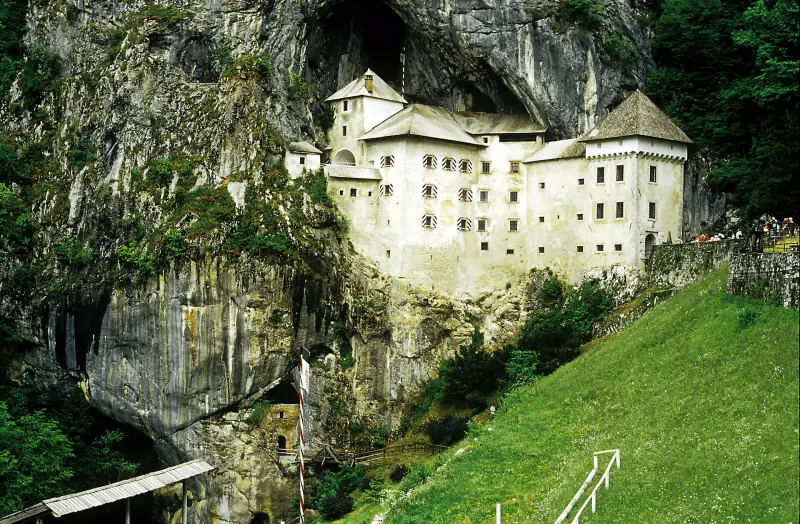
It is 8–10 °C inside in every season, and the train creates a cold draught. Bring a warm layer even in August. In summer, book a timed ticket in advance and pair the visit with Predjama Castle, 9 km away.
Opening times, tour schedules and prices change with the season. Always confirm them with the operator before you travel: postojnska-jama.eu.