Rakov Škocjan
A collapsed cave turned forest valley, where two rock bridges still span the stream that made them.
A cave with the lid off
Two natural bridges, a sinking stream and a forest trail.
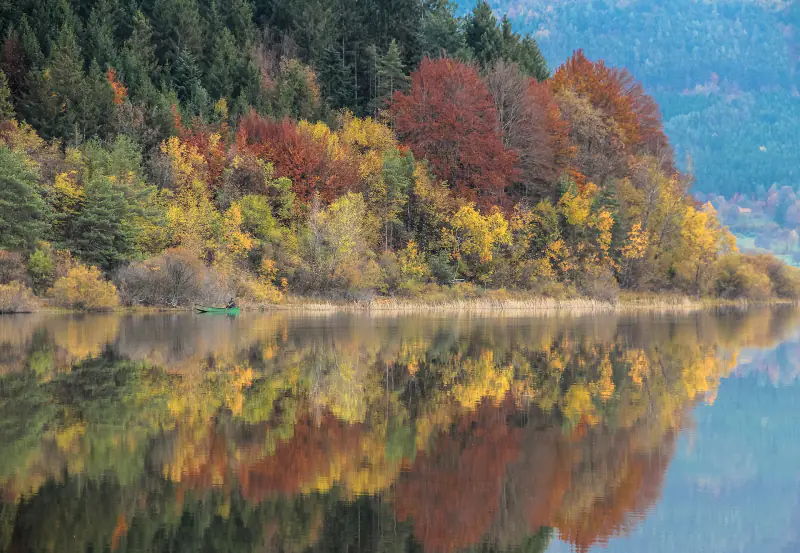
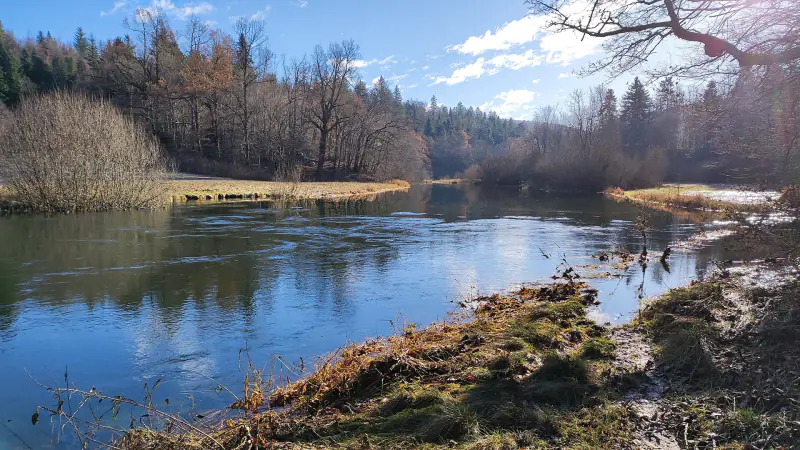
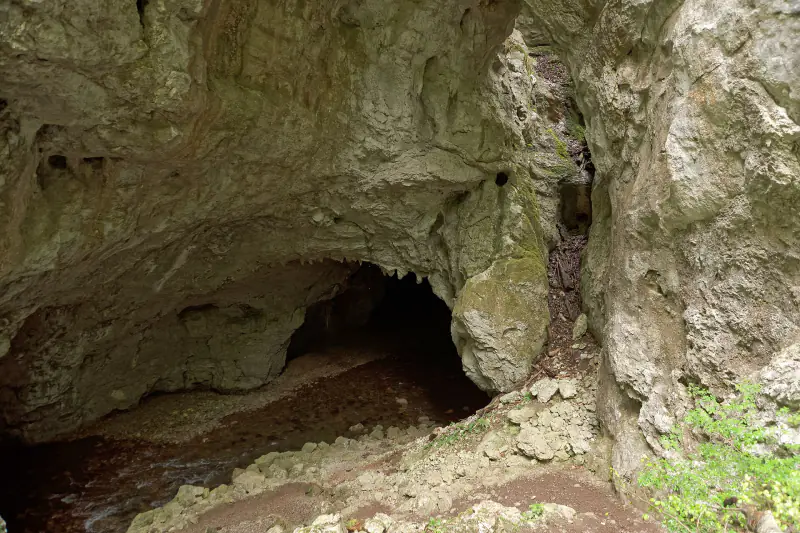
Rakov Škocjan is a short, wooded valley between Lake Cerknica and Planinsko polje. Geologically it is a cave that has lost most of its roof. The Rak stream, carrying water from Lake Cerknica, emerges from the Zelške jame caves at the upper end, runs for about two and a half kilometres in the open, and vanishes into Tkalca jama at the lower end on its way to Planina Cave.
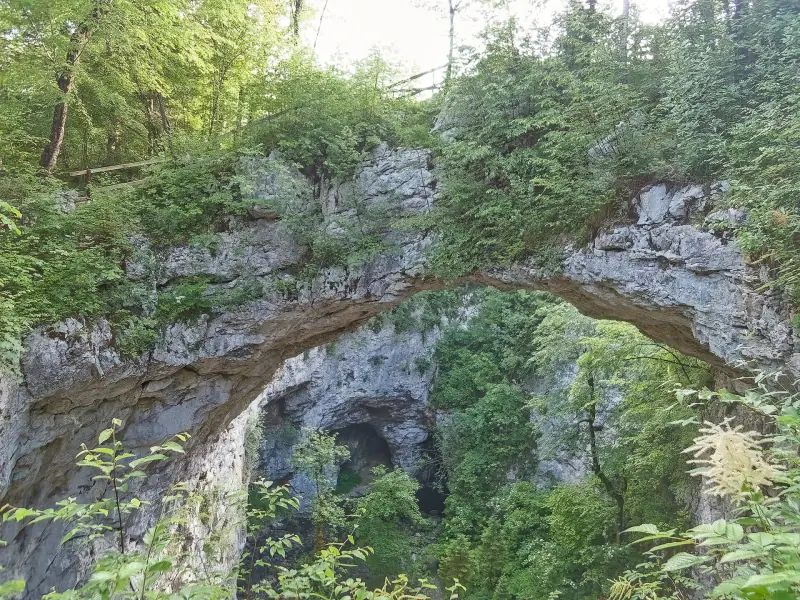
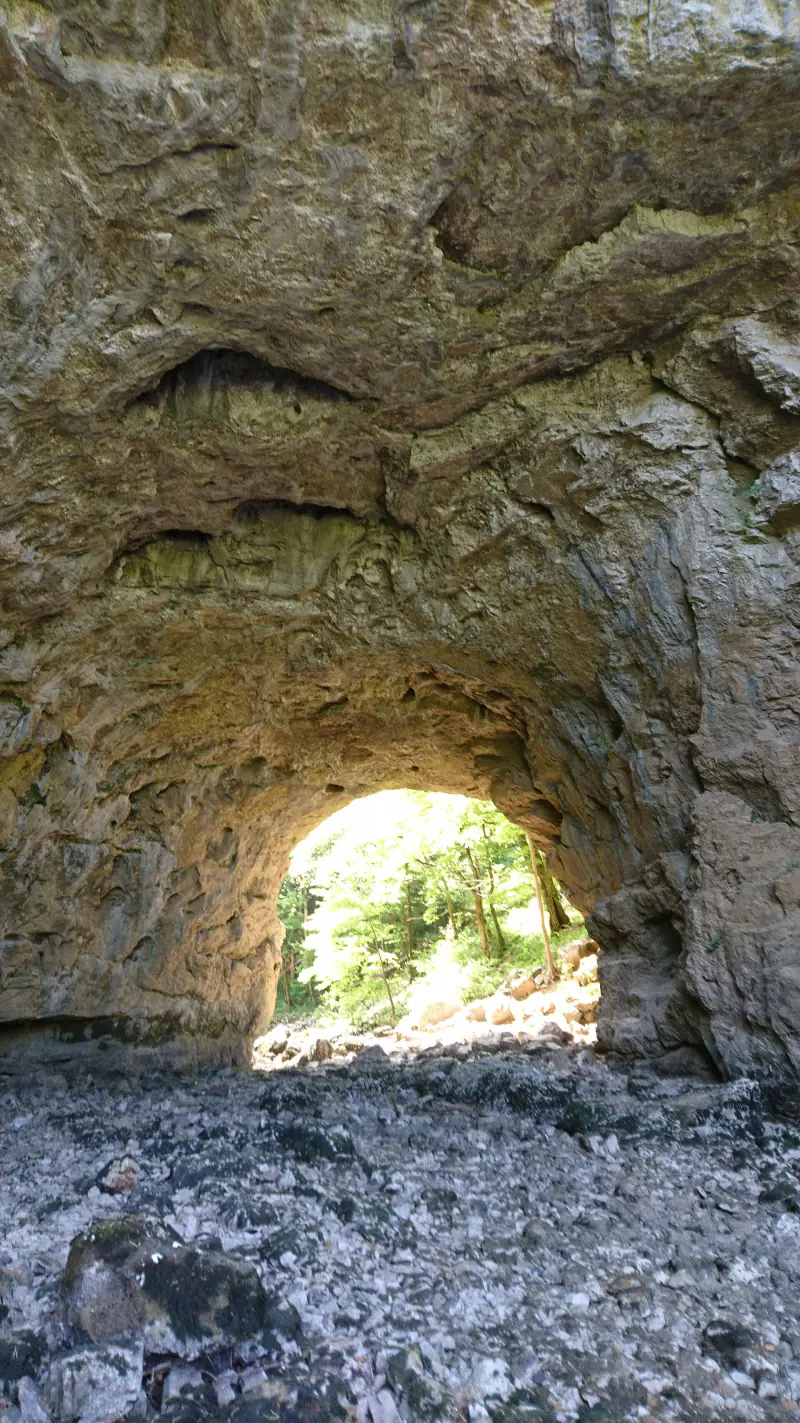
Where the ceiling has not yet fallen, it survives as two natural bridges. The valley was protected in 1949, which makes it the oldest landscape park in Slovenia.
Rakov Škocjan at a glance
- Location
- between Cerknica and Unec
- Length of valley
- about 2.5 km
- Stream
- Rak
- Protected
- since 1949
- Little Natural Bridge
- arch about 40 m high
- Great Natural Bridge
- arch about 37 m high
- Entry
- free, open all year
- Time needed
- 2–3 hours on foot
The Little Natural Bridge and Zelške jame
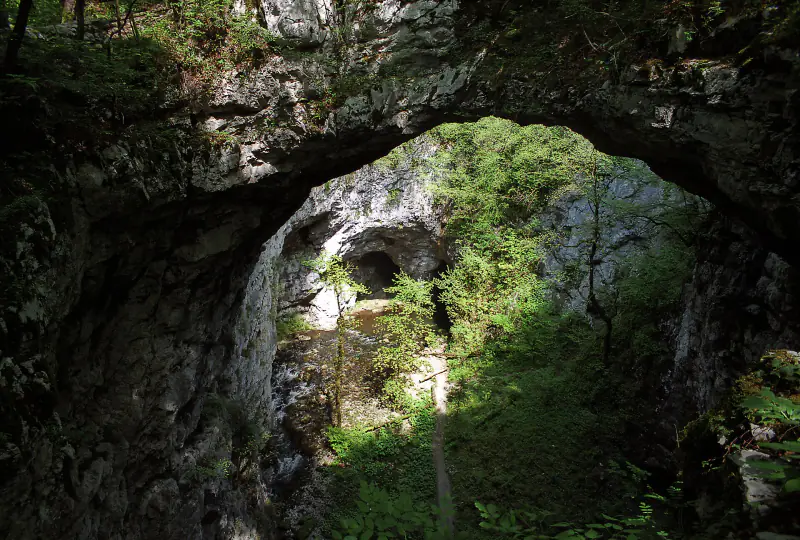
At the head of the valley a slender arch of rock spans a chain of collapse dolines. This is the Little Natural Bridge, Mali naravni most. A path crosses its top, barely a few metres wide, with the stream more than 40 metres below.
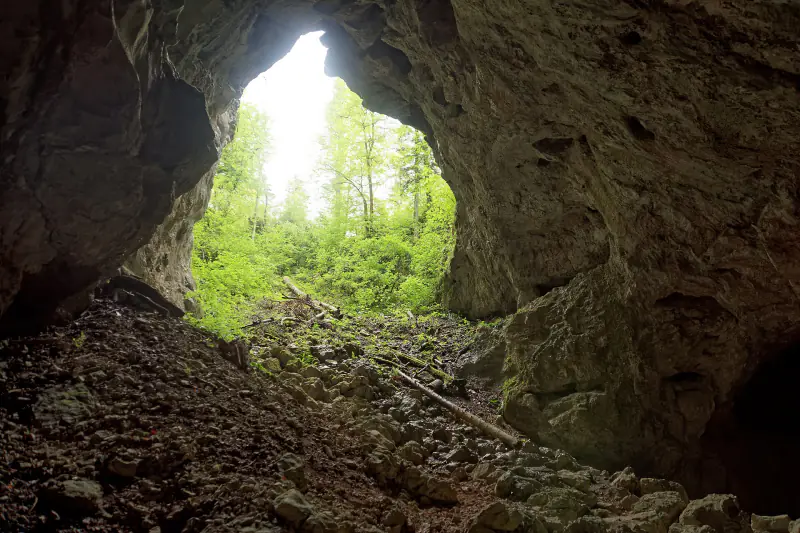
Steps lead down into the dolines and to the mouths of the Zelške jame, where the Rak first appears. In dry weather you can walk a little way into the entrance chambers by daylight.
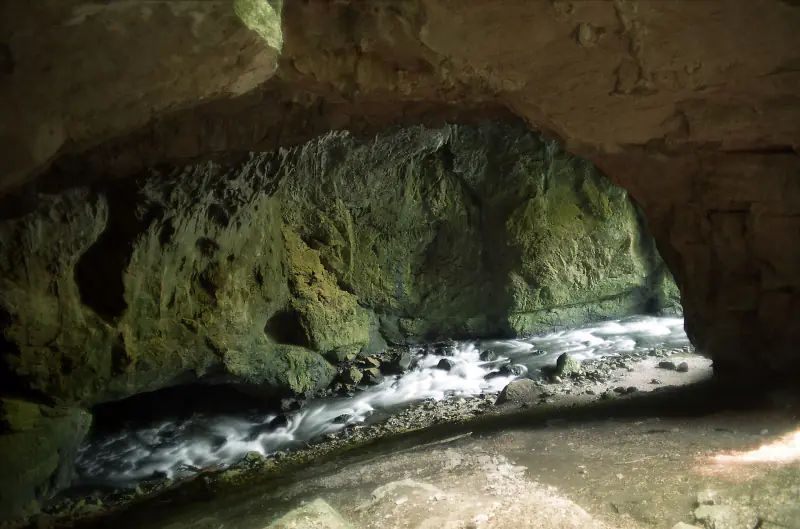
The Great Natural Bridge and Tkalca jama
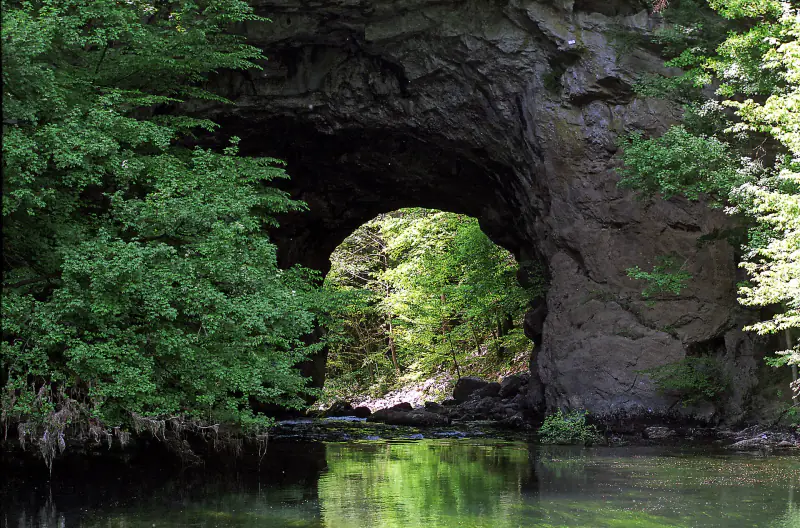
The Great Natural Bridge, Veliki naravni most, is a massive vault at the lower end of the valley. The road runs over it; the best view is from the stream bed underneath. Just beyond, the Rak flows into the wide mouth of Tkalca jama, the Weaver's Cave, and is gone.
After heavy rain the outlet cannot take the flow. Water backs up under the bridge and the lower valley becomes a lake.
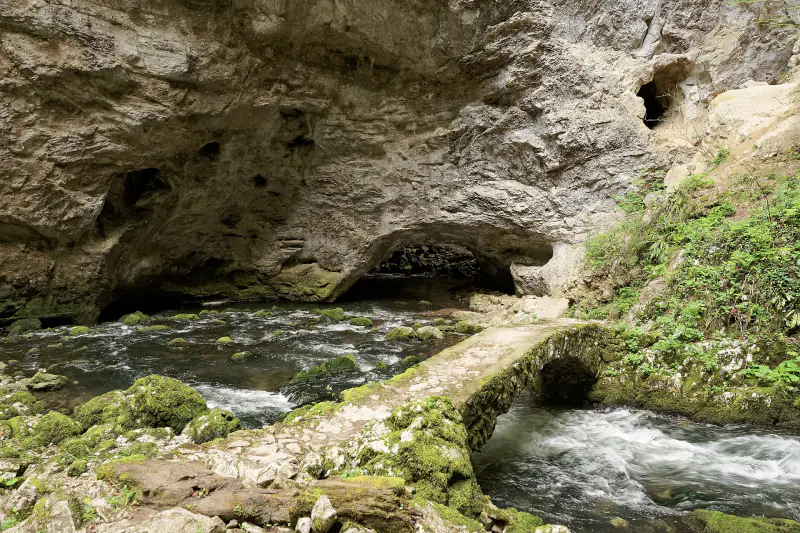
Why it is called Škocjan
Škocjan is a contraction of Sveti Kancijan, Saint Cantianus, to whom a church above the Great Natural Bridge was dedicated; its ruins are still there. The same saint gave his name to the Škocjan Caves 70 km away, which is a regular source of confusion for visitors.
In pictures
Walking the valley
Getting there
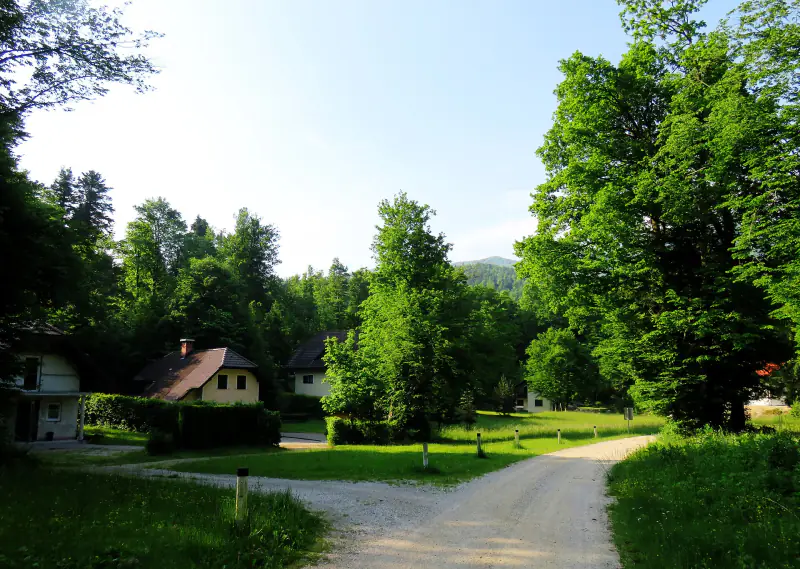
Turn off the old Postojna–Ljubljana road at Unec, or approach from Cerknica. A narrow gravel road runs the length of the valley, with small car parks near each bridge.
The trail
A marked educational trail links all the main features in a loop of roughly two to three hours. Paths into the dolines are steep and slippery when wet.
Good to know
Do not enter the caves beyond daylight without a guide and equipment. In spring and after autumn rains parts of the trail are under water. Combine with Lake Cerknica, ten minutes away.