Life in the dark
Slovenia's caves hold one of the richest communities of cave-adapted animals on Earth. The science of cave biology began here.
Visitors, lodgers and residents
No light, no seasons, very little food.
Biologists sort cave animals by how much they depend on the underground.
Trogloxenes are visitors. Bats roost and hibernate in caves but feed outside. Troglophiles can complete their life cycle underground but also live in similar dark, damp places on the surface; many cave crickets and spiders are of this kind.
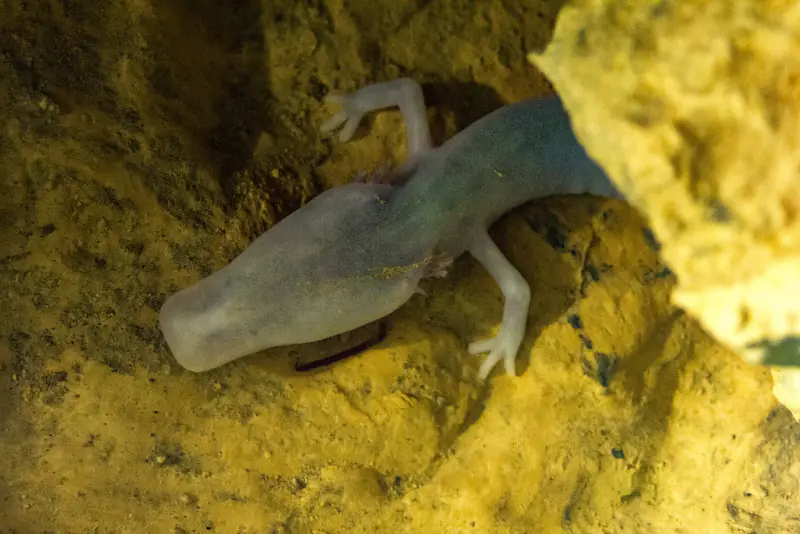
Troglobites are the true residents, unable to survive anywhere else. They tend to look alike whatever group they belong to: eyeless, colourless, with long legs and antennae, a slow metabolism and a long life. Their aquatic counterparts are called stygobites. The olm is one.
A beetle named for its narrow neck
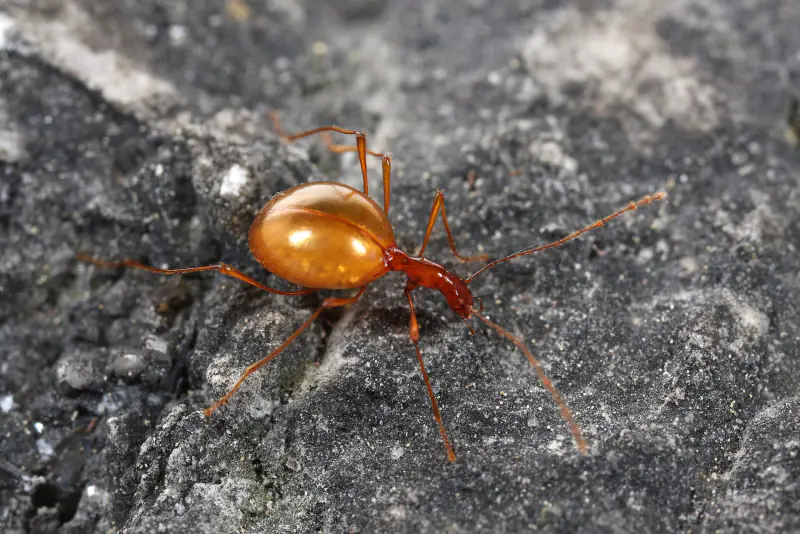
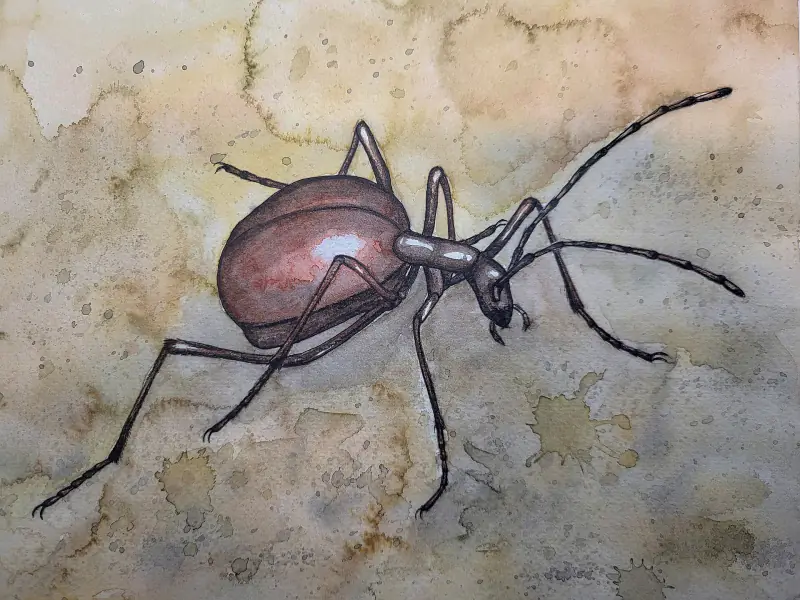
Leptodirus hochenwartii is about eight millimetres long, amber-coloured and blind, with a swollen, domed body and spindly legs. Luka Čeč found it in Postojna Cave in 1831 and passed it to the naturalist Count Franz von Hohenwart; Ferdinand Schmidt described it in 1832.
It was the first animal recognised as a specialised cave-dweller, and the search for a second specimen sent collectors into caves across Carniola. Speleobiology dates from this insect.
Shrimps, snails and a tube worm
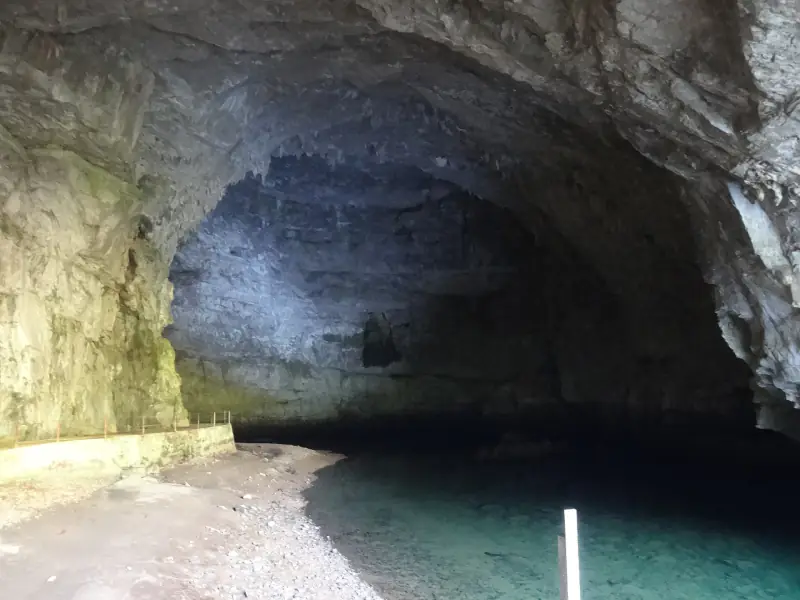
The richest communities are aquatic. Slovenia's groundwater holds blind amphipods of the genus Niphargus, translucent cave shrimps (Troglocaris), tiny snails, and Marifugia cavatica, the only freshwater tube worm in the world that lives in caves. Its limy tubes build up over centuries into crusts on the walls of underground rivers.
The Postojna–Planina system alone is home to well over a hundred species found only underground, one of the highest totals known for any cave.
The winter tenants
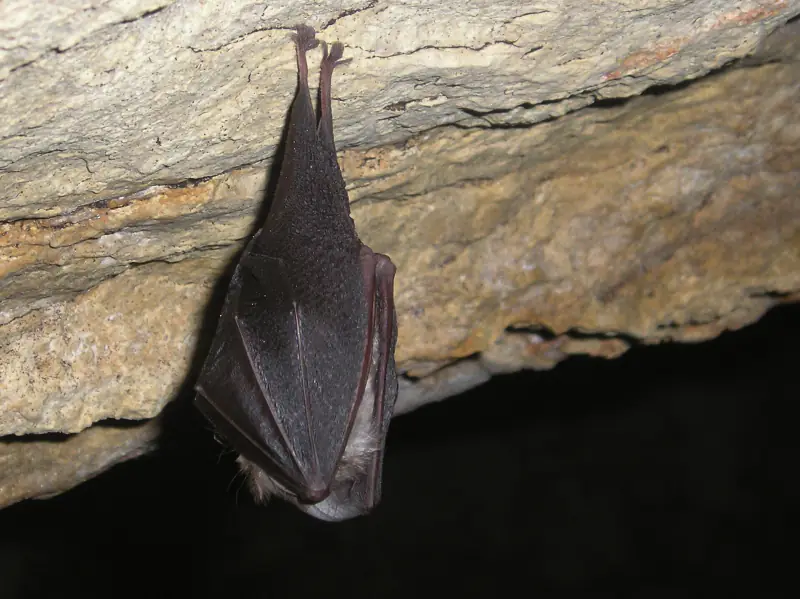
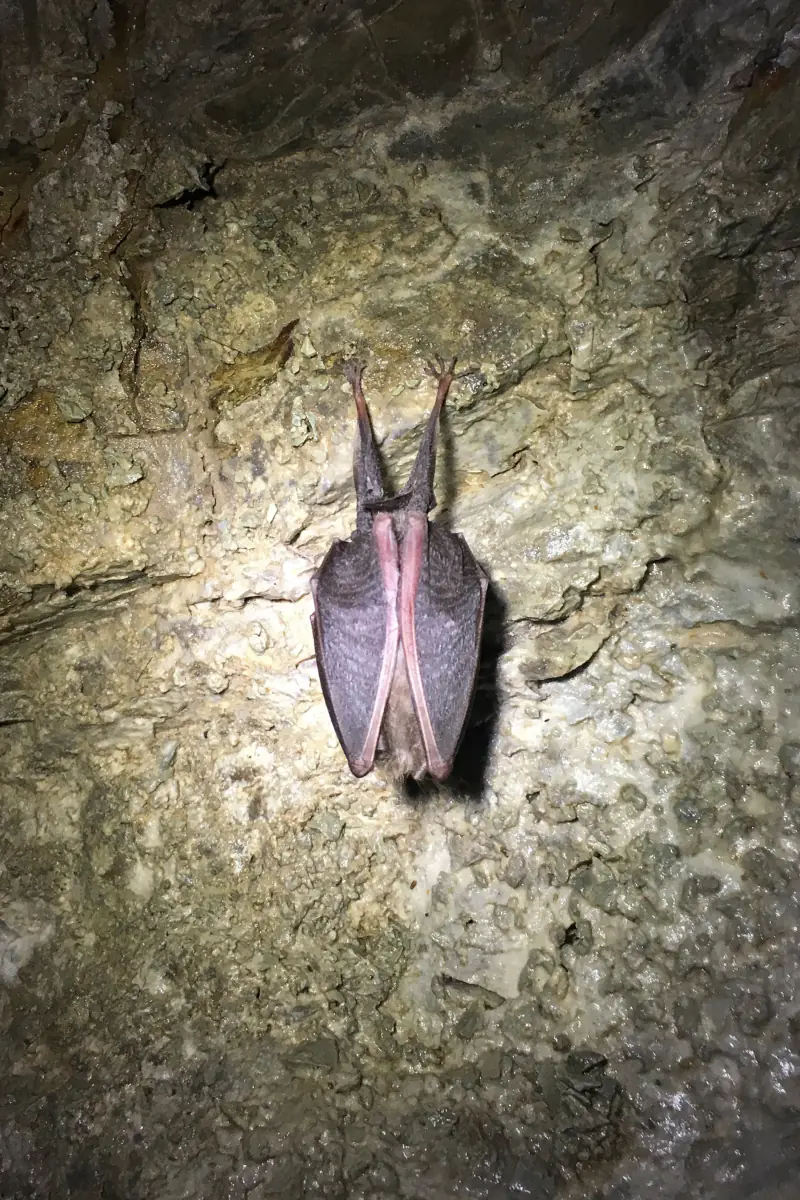
Around thirty species of bat live in Slovenia, and many depend on caves for hibernation, when a stable, cool, humid roost lets them survive months without feeding. Waking a hibernating bat can cost it the fat reserves it needs to see out the winter.
This is why the cave beneath Predjama Castle and several others close for part of the year. The lesser horseshoe bat, which wraps itself in its wings like a small dark pear, is the one visitors most often notice.
The cave bear
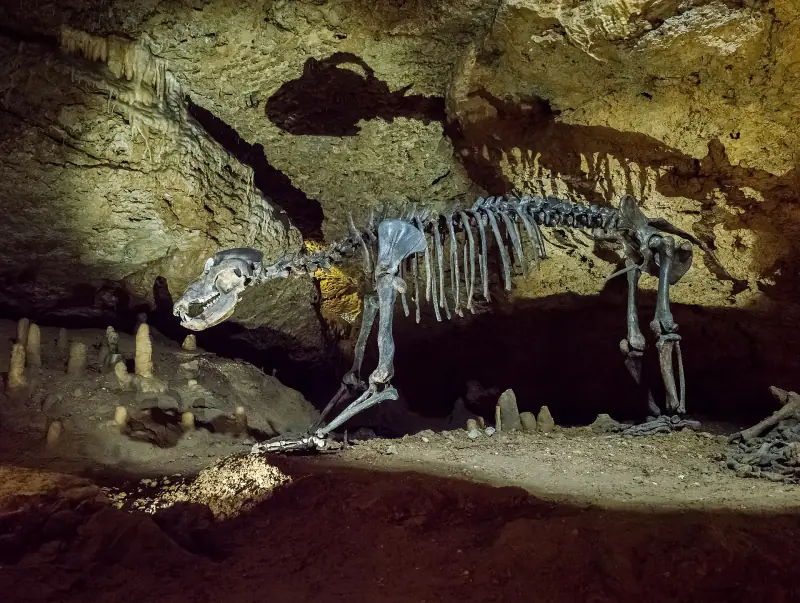
Ursus spelaeus was a mostly vegetarian relative of the brown bear, and larger. It hibernated deep in caves, and animals that died during the winter accumulated over thousands of years. The species disappeared around 24,000 years ago, near the peak of the last glaciation.
Its bones have been found in great numbers in Križna jama, at Potočka zijalka, and at Divje Babe, where one femur became the most debated object in Slovenian archaeology.
Underground biodiversity
What do they eat?
With no light there are no green plants, so nearly all the energy in a cave comes from outside. Sinking streams wash in leaves, wood and drowned insects. Water seeping through the roof carries dissolved organic matter. Bats bring in guano.
It is a thin supply. Cave animals respond by doing everything slowly: growing, moving, breeding. That makes their populations small and slow to recover, and it is the reason for the first rule of cave visiting, which is to leave nothing behind and take nothing out.
Help protect it
A dropped battery or a discarded snack changes a cave ecosystem for years.