Lake Cerknica
The largest lake in Slovenia for part of the year, and a hay meadow for the rest.
Now a lake, now a meadow
Fish, plough, mow and hunt on the same spot in a single year, as Valvasor put it.
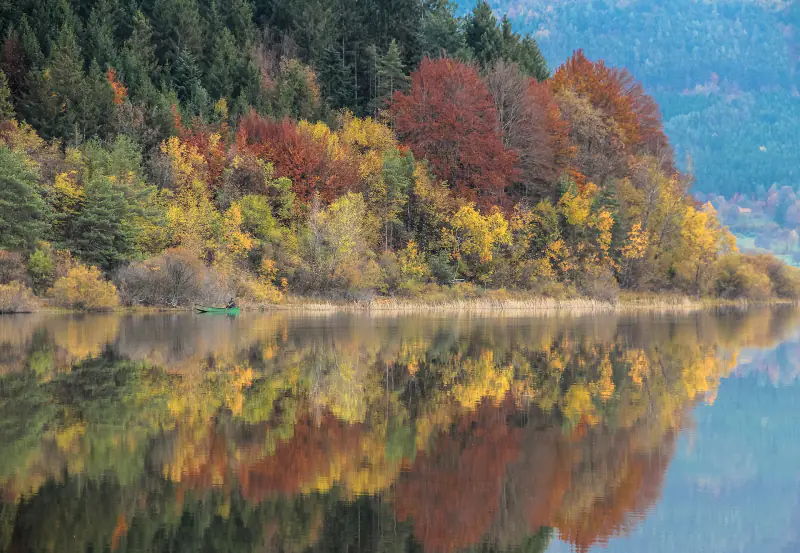
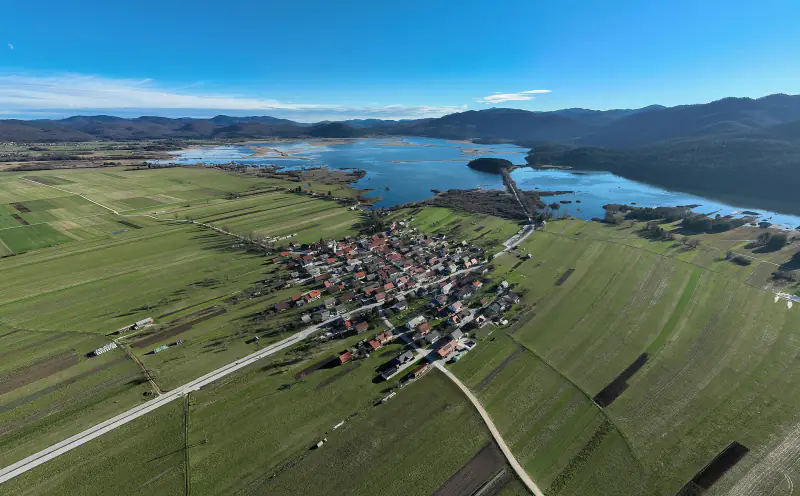
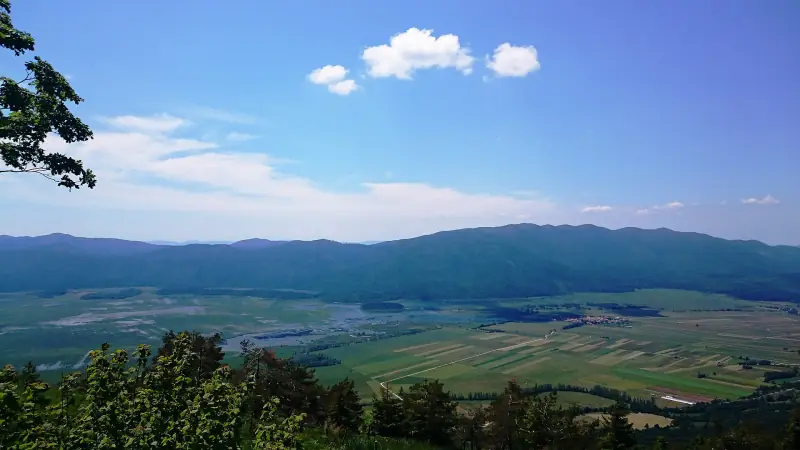
Cerkniško polje is a flat-floored karst basin about ten kilometres long, ringed by forested hills. In a wet season water pours into it from springs along its southern and eastern edges faster than the swallow holes on the opposite side can drain it. The plain floods, and for a time Slovenia has a lake of more than 25 square kilometres, the largest in the country.
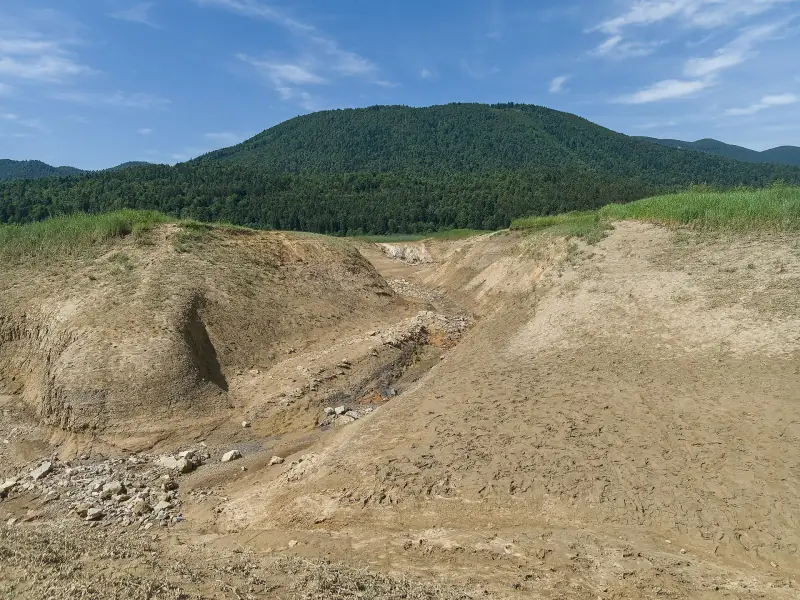
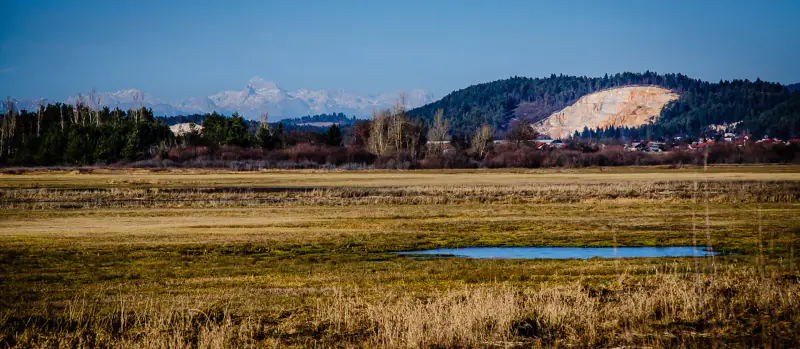
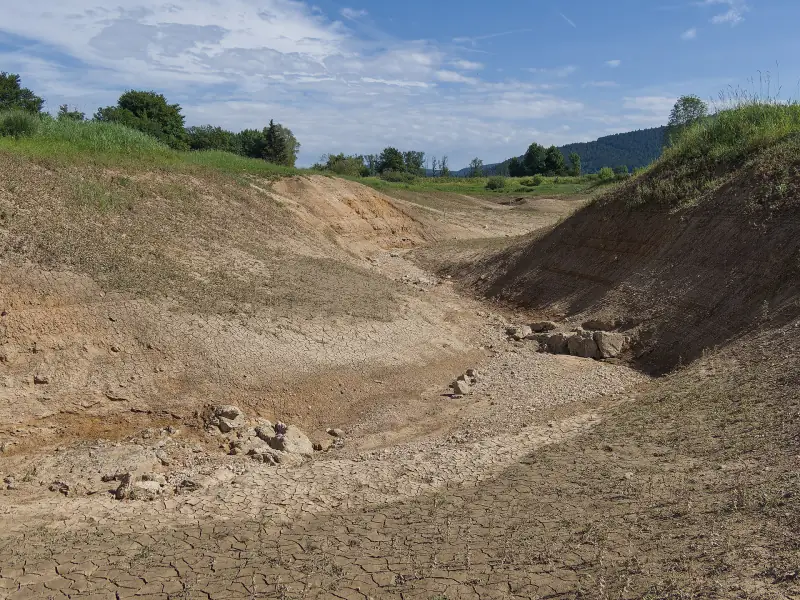
As the inflow slackens the water drops, shrinking to the channel of the Stržen and a few pools around the main ponors. In a dry summer the bed turns to pasture and hay meadow. The lake typically holds water for around eight months of the year, but no two years are alike.
Lake Cerknica at a glance
- Slovene name
- Cerkniško jezero
- Type
- intermittent karst lake on a polje
- Area when full
- about 26 km², more in exceptional floods
- Usually present
- autumn to late spring
- Drains through
- ponors and caves, towards Rakov Škocjan
- Protected as
- Notranjska Regional Park; Ramsar wetland
- Bird species recorded
- more than 250
- Entry
- free
Springs on one side, ponors on the other
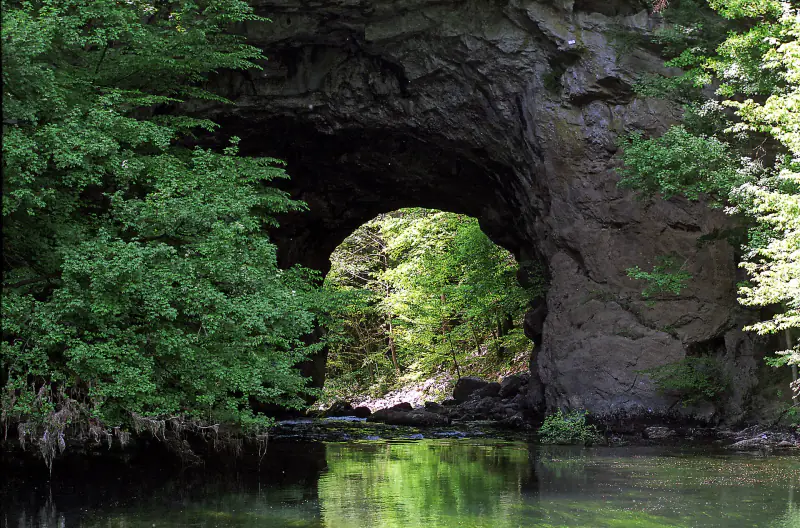
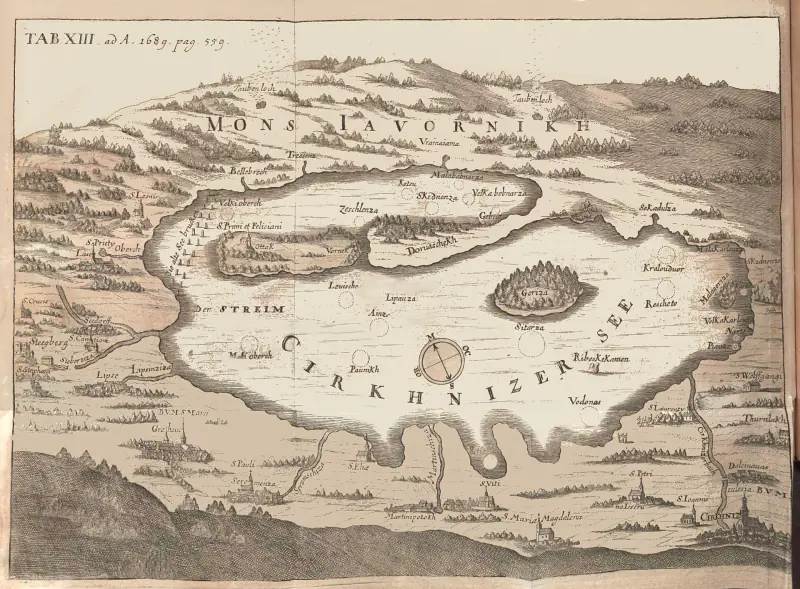
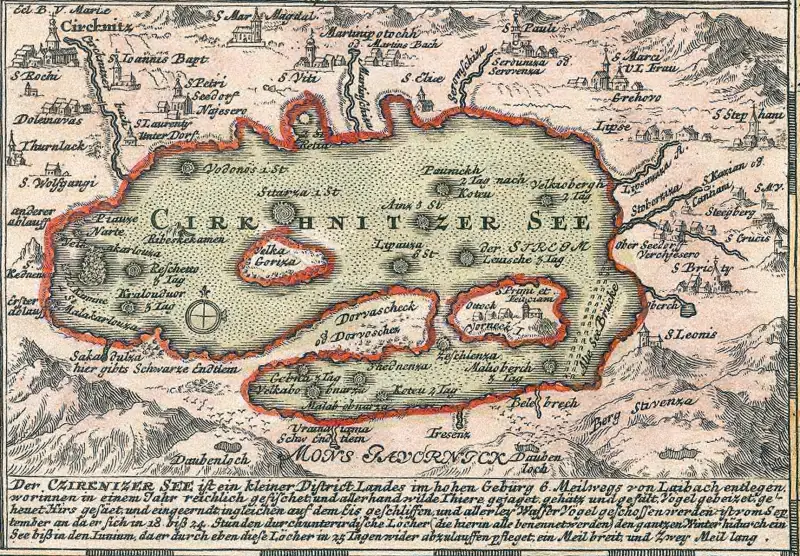
The water arrives underground from the Lož Valley and the Bloke plateau. It leaves partly through the caves Velika and Mala Karlovica at the north-western end, towards Rakov Škocjan, and partly straight down through groups of ponors in the lake bed with names like Rešeto, 'the Sieve', and Vodonos.
Some openings work in both directions: they swallow water as the lake falls and spout it as the groundwater rises. Hydrologists call these estavelles.
The lake that made a scientist's name
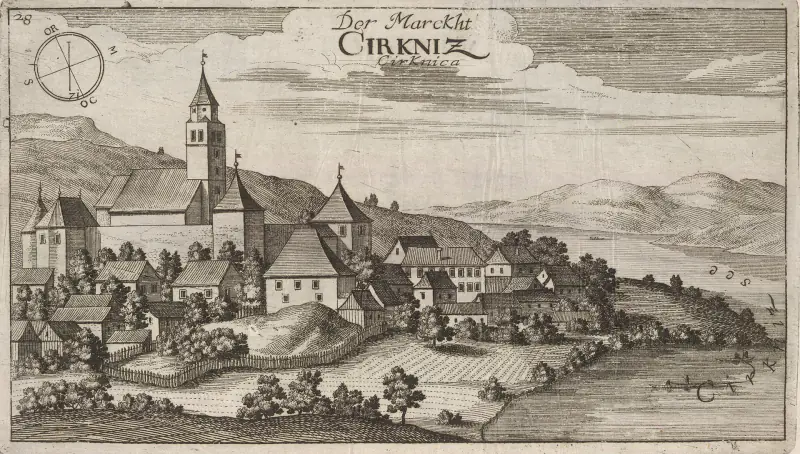
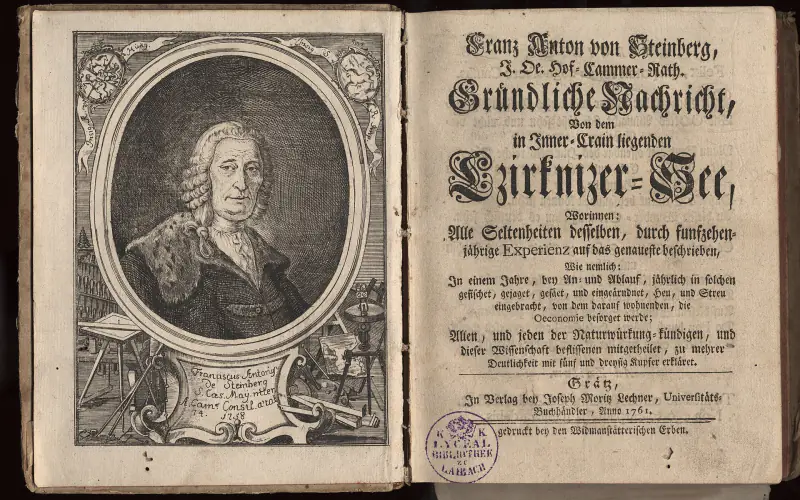
The polymath Johann Weikhard von Valvasor studied the lake in the 1680s and proposed a mechanism of underground reservoirs and siphons to explain it. His account, sent to London, earned him election to the Royal Society in 1687. He described it again in The Glory of the Duchy of Carniola (1689).
His model was wrong in detail but right in principle: the lake is governed by water moving through the rock beneath it.
A wetland of European importance
The yearly cycle of flood and drought creates reed beds, wet meadows and shallow open water over a huge area. More than 250 species of bird have been recorded, among them corncrakes and bitterns, and the lake is a major staging post on migration.
Pike, tench and chub retreat into the ponors and underground channels as the water falls. Traditionally villagers netted them at the swallow holes as the lake drained.
The lake in figures
In pictures
Seeing the lake
When to go
For the lake at its fullest, come from late autumn to April. For walking on the dry bed among the ponors, late summer. The change itself is the attraction, so there is no wrong season.
Where to look
The village of Dolenje Jezero sits on the shore and has a museum with a working model of the lake. For an overview, drive or walk up Mount Slivnica above Cerknica.
On the water
When levels allow, local outfitters rent canoes and traditional flat-bottomed boats. Cycling and walking routes circle the polje.